
金工
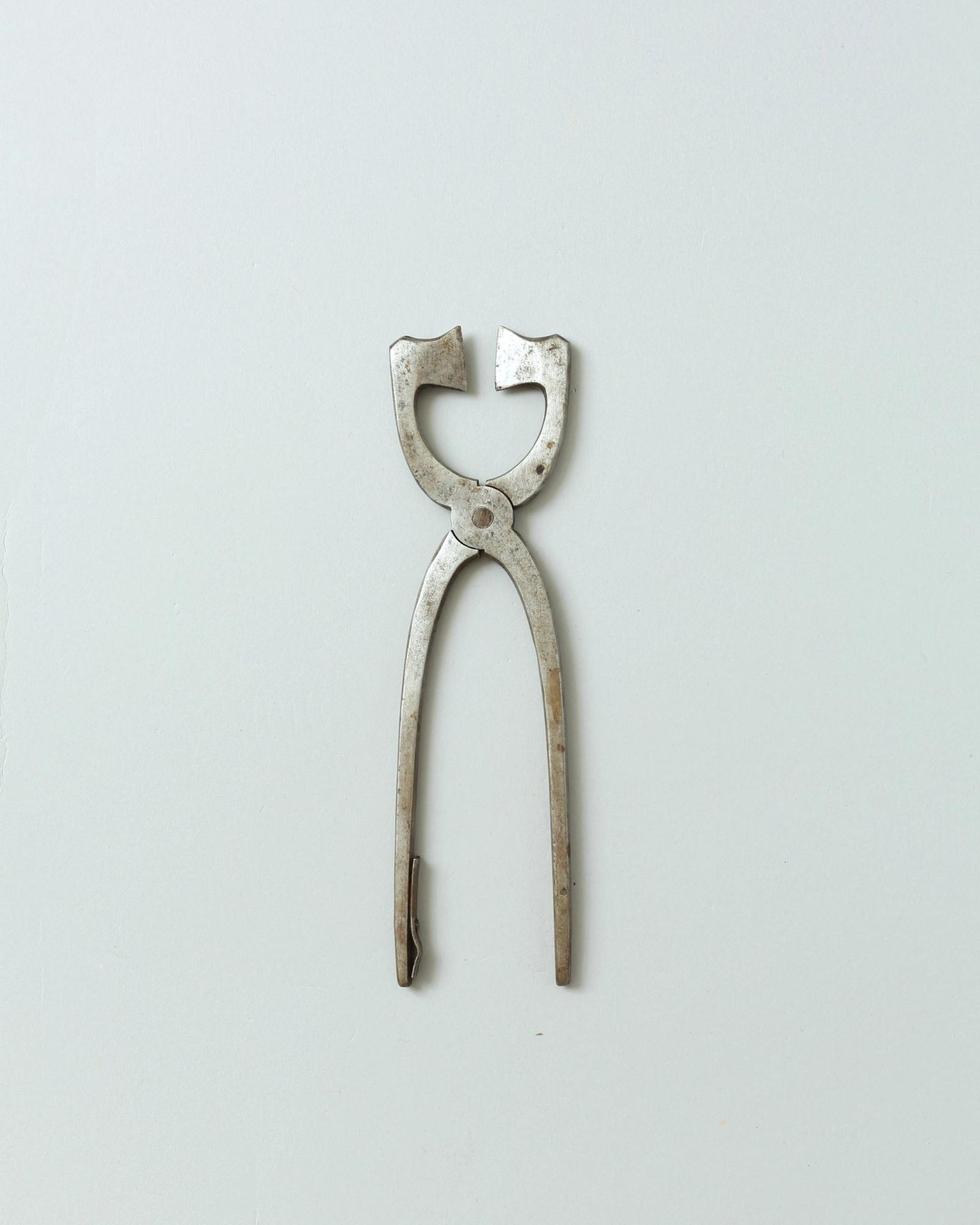
鍛造 シュガーニッパー
Sweden / 19th century
W5cm × L21.5cm
¥3,800 (tax in)
Stock: 01
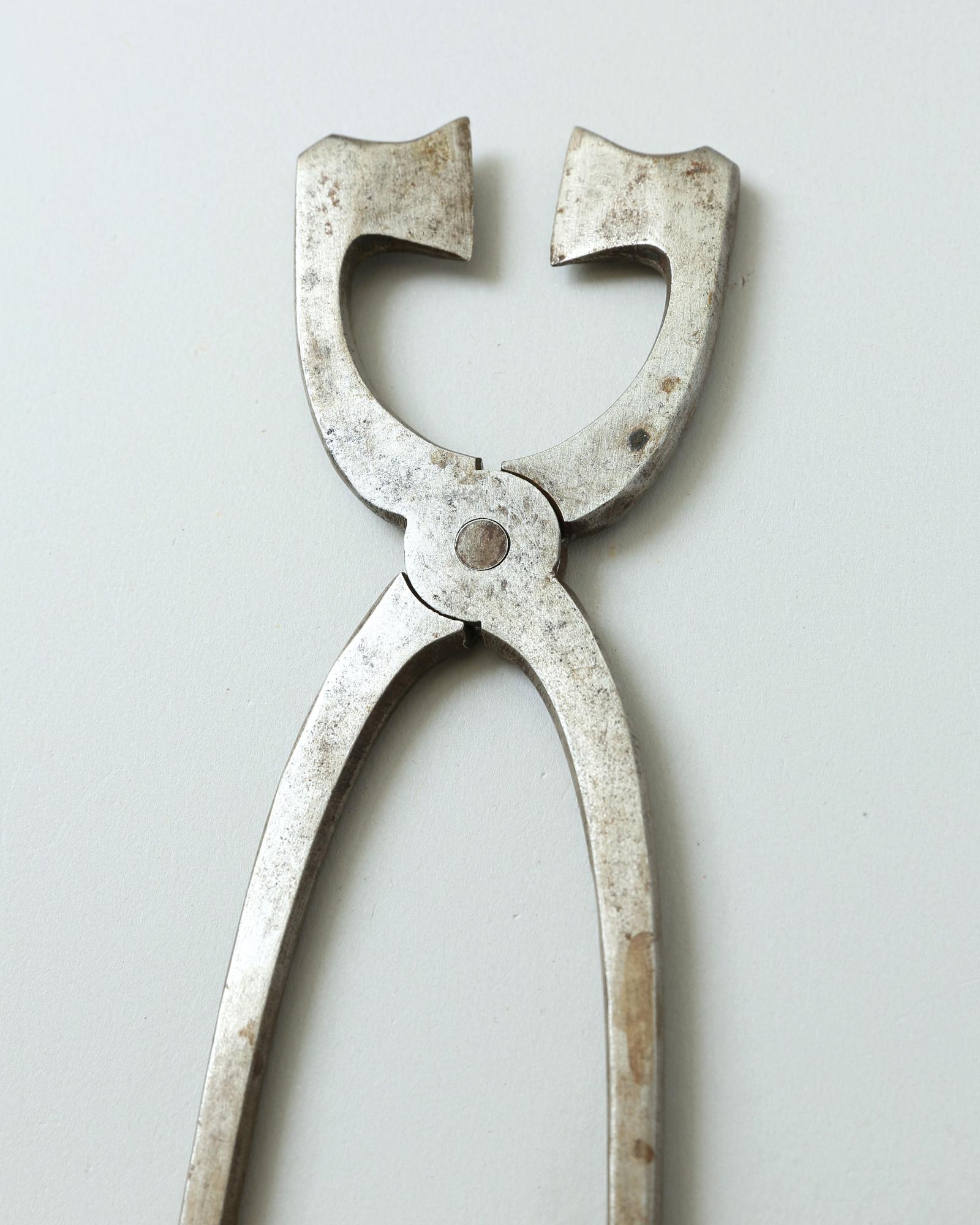
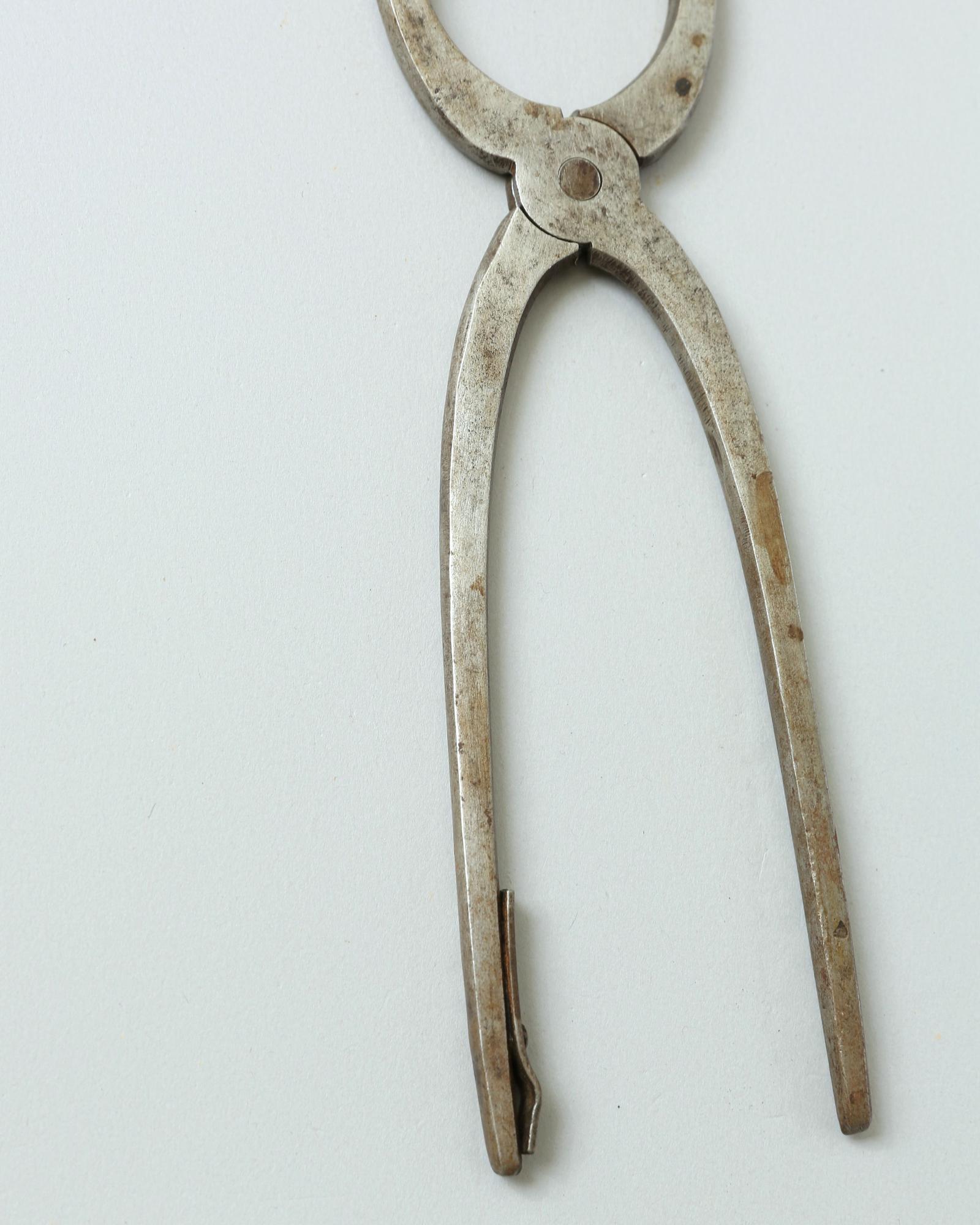
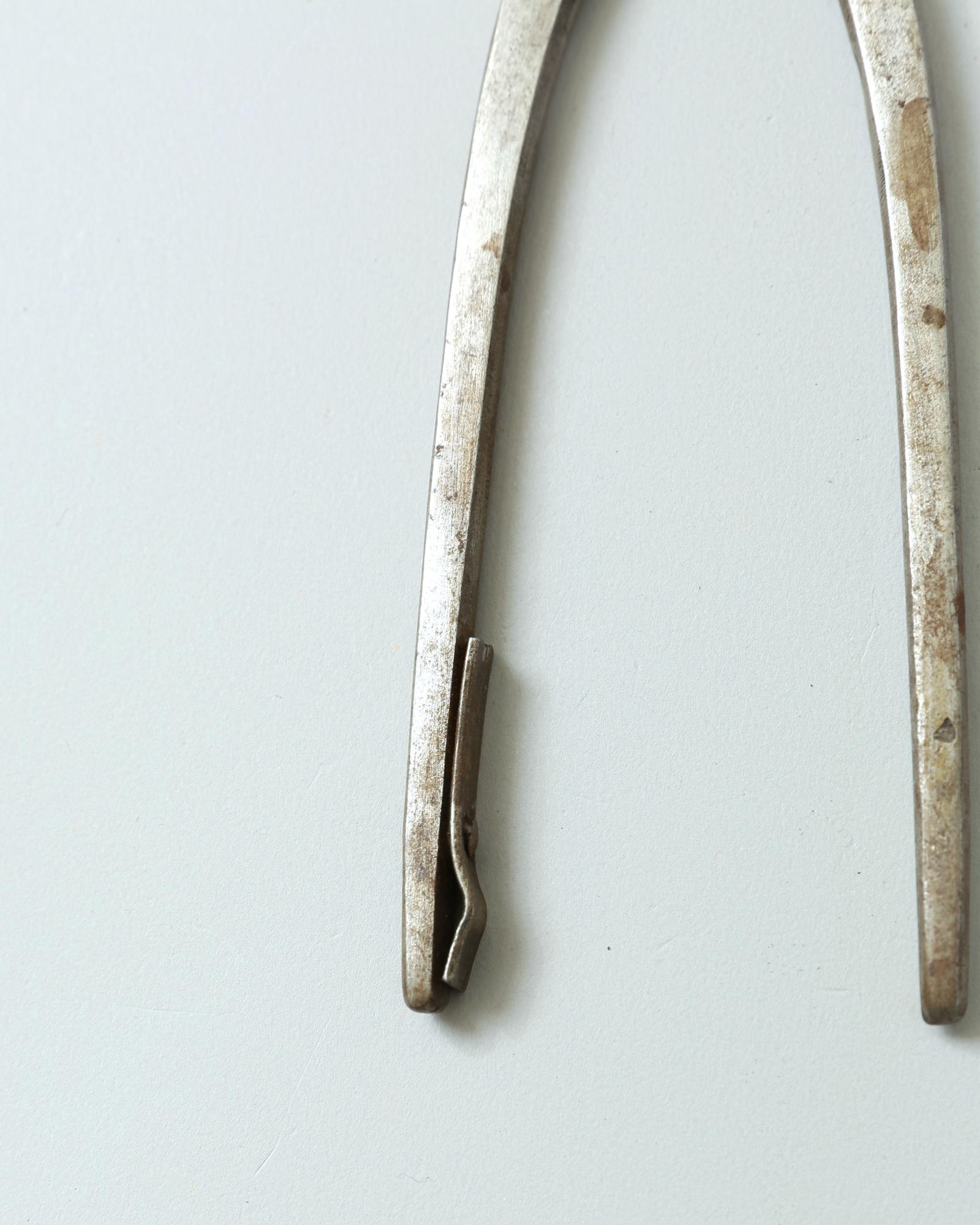
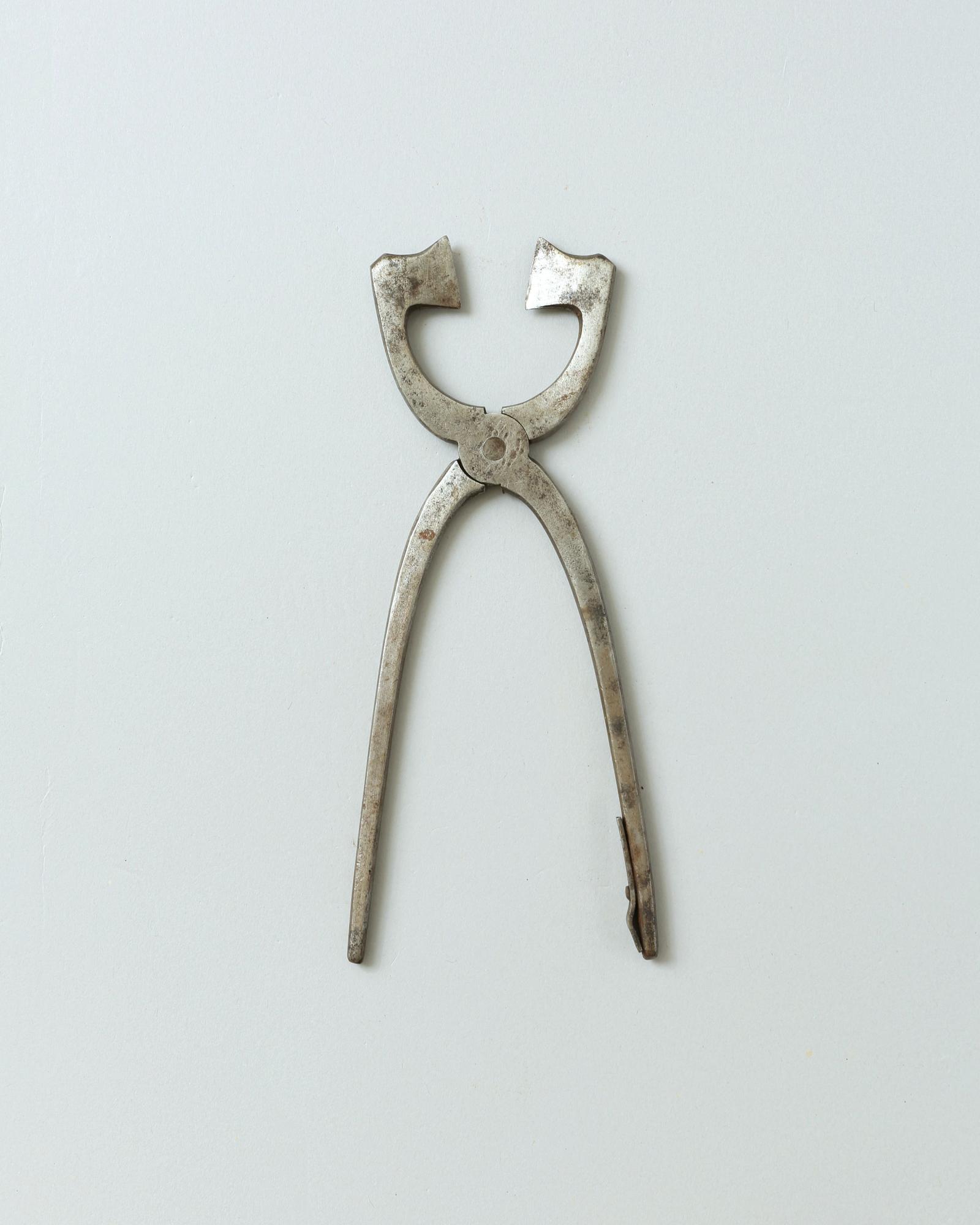
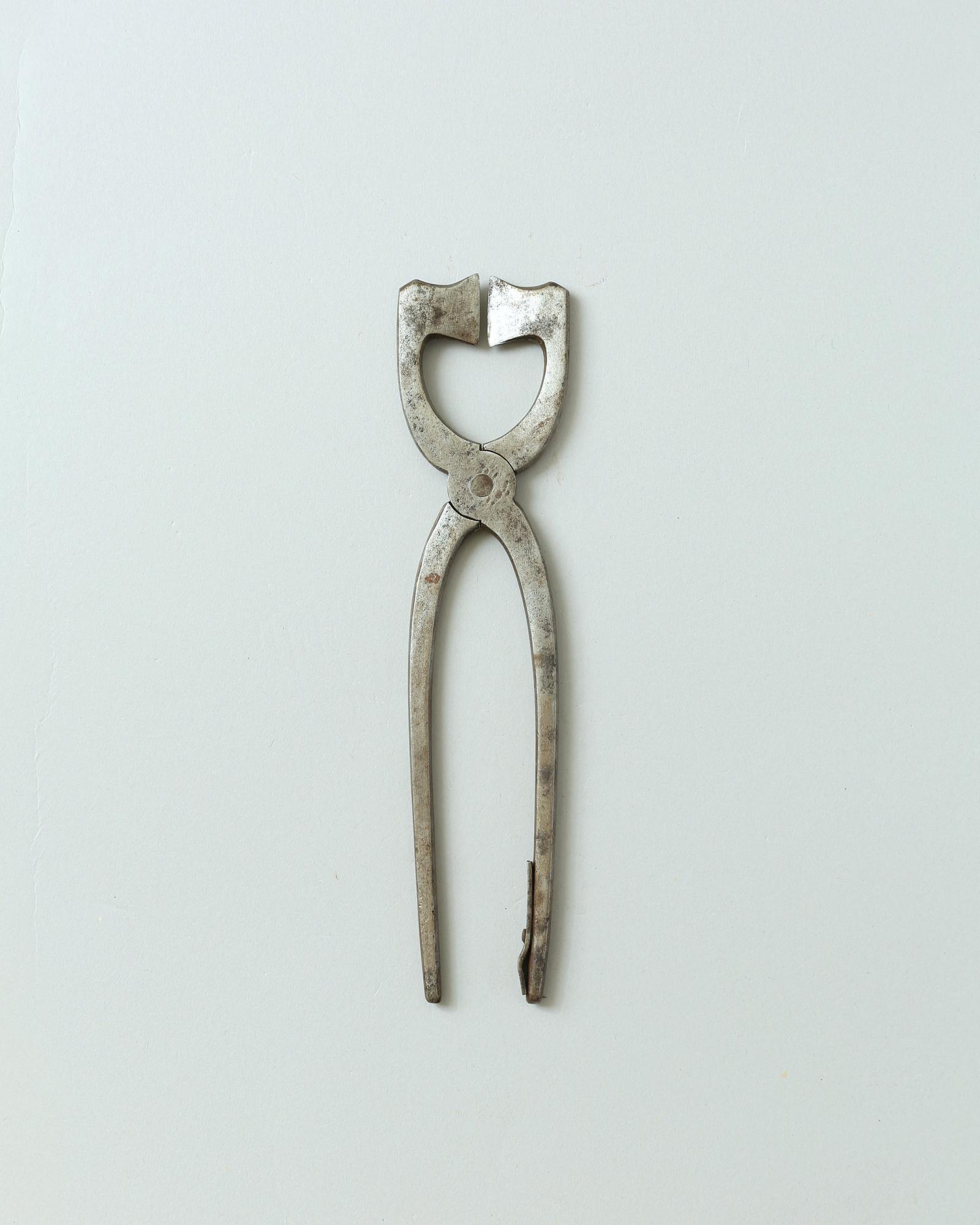
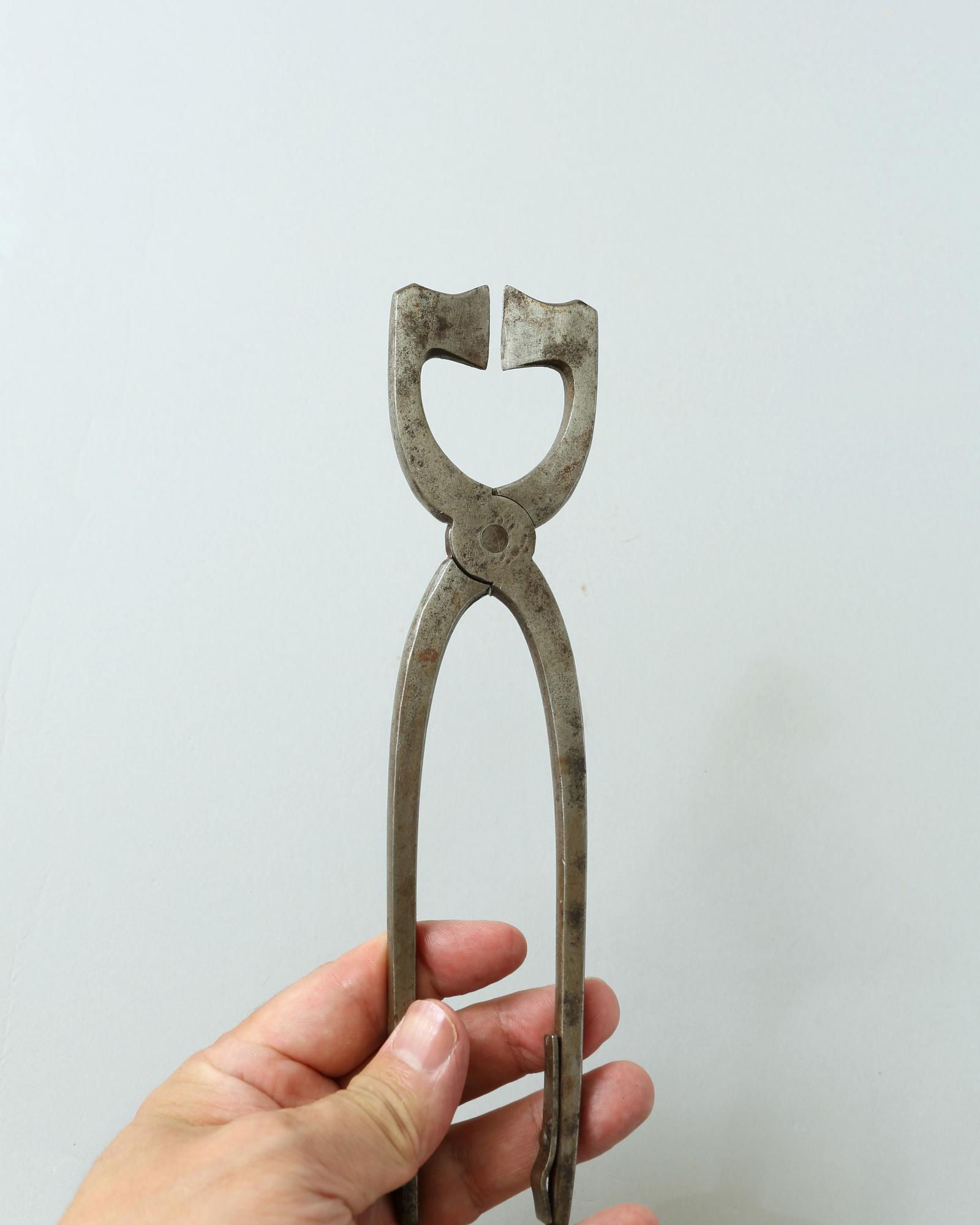
砂糖がまだ円錐形の塊「シュガーローフ」で売られていた時代の道具です。硬く固まった砂糖を、向かい合う二枚の刃で挟んで割り、匙に載る大きさへ切り出しました。片方の柄の内側には同じ鋼の帯が留められ、下端が鉤の形に折れて柄の先から突き出しています。これは脚です。砂糖の塊は宙で握って割れるほど柔らかくないので、この脚を卓の面や縁に突いて本体を支え、もう一方の柄を上から体重で押し下げる ── 手を卓から浮かせたまま力をかけられるようにするための支点で、だからこの道具には必ず付いています。刃のすぐ下が大きく丸く抜かれているのは、割れた砂糖の逃げ場。砂糖が安くなり粒で買えるようになると、この道具は台所から姿を消しました。 この個体は、その脚の板が途中で折れて上側が欠損しています。留めのリベットと、卓に当てる鉤の部分は残っていますが、部品としては不完全な状態です。破断面はそのままにしてあります。刃と軸に大きな傷みはなく、全体に経年の錆と黒ずみが出ています。もっとも、これで砂糖を割る方はいらっしゃらないと思いますが ── 脚を欠いた今、道具としては成立しません。観賞用としてお迎えください。
From the years when sugar came as a hard cone — a sugar loaf — instead of as grains. Two opposed blades bit into it and broke off pieces small enough for a spoon. A strip of the same steel is fixed inside one handle and bends out into a hook past its end: this is the foot. A sugar loaf is far too hard to crack by squeezing in mid-air, so the foot was set against the table top or its edge to hold the tool steady and keep the hands clear of the surface, and the other handle was driven down with the weight of the arm. Every one of these tools has it. The wide round opening below the blades is where the broken sugar falls clear. Cheap granulated sugar took tools like this out of the kitchen. On this example the plate that forms the foot has broken partway along and the upper portion is lost. The rivet and the hooked end that meets the table are still there, but the part is no longer complete. The fracture has been left as it is. The blades and the pivot are sound, and there is light rust and darkening overall. Not that anyone is likely to be breaking sugar with it — but with the foot gone it no longer stands up as a tool, and it comes to you as something to look at.