
ガラス
教会窓ガラス残欠
France / 18th–19th century (attributed)
⌀9–10cm approx. (set of 3)
¥24,000 (tax in)
Stock: 01
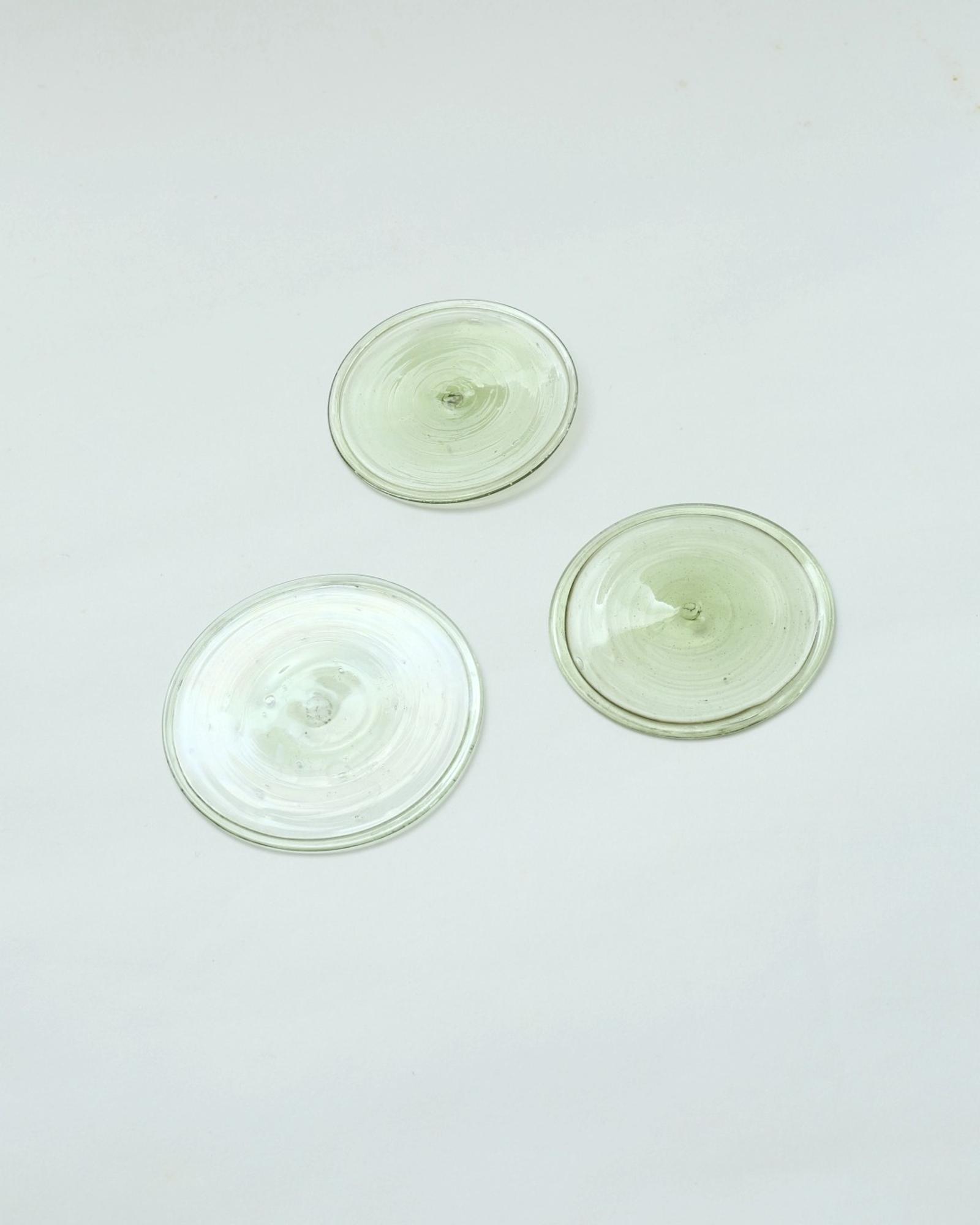
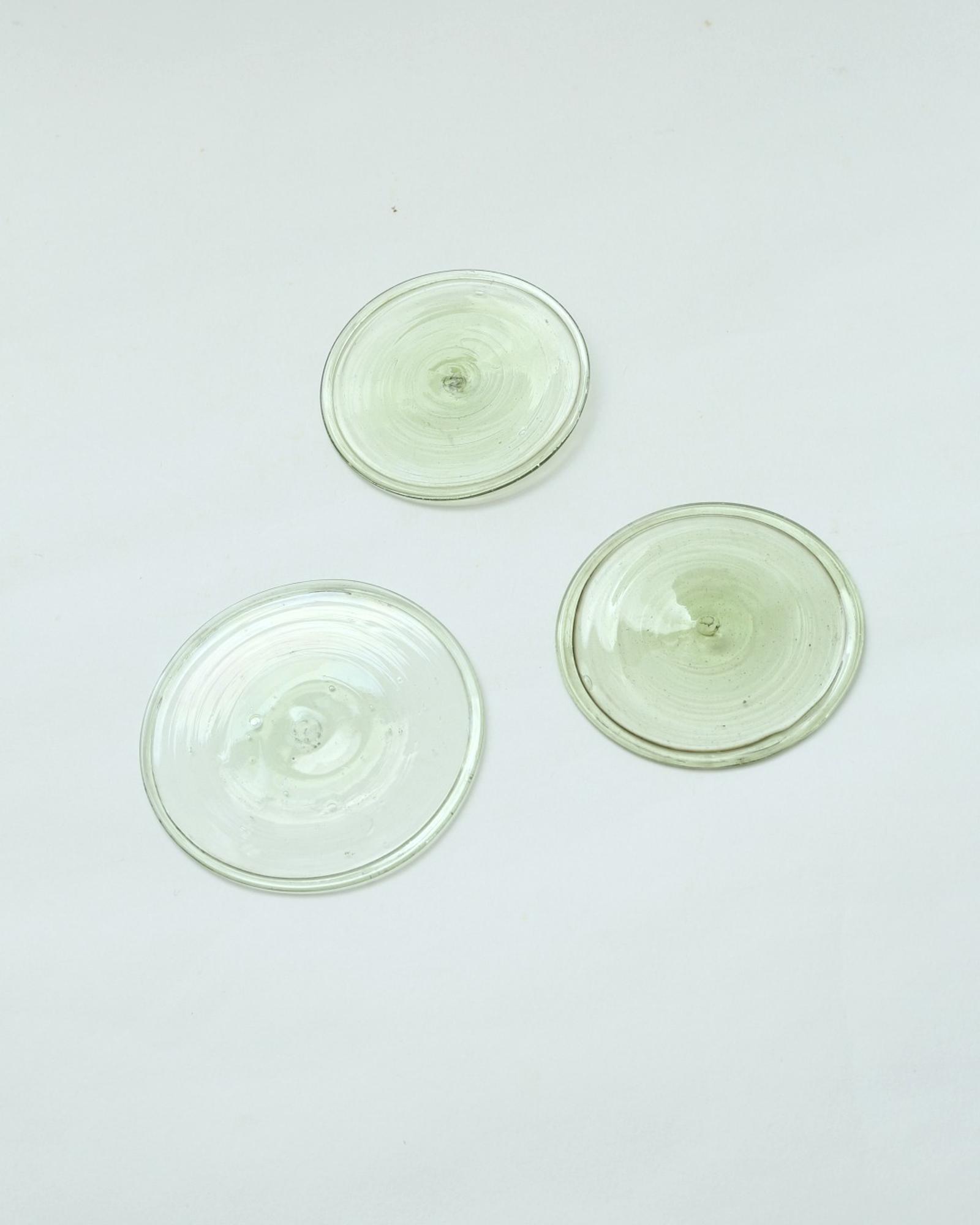
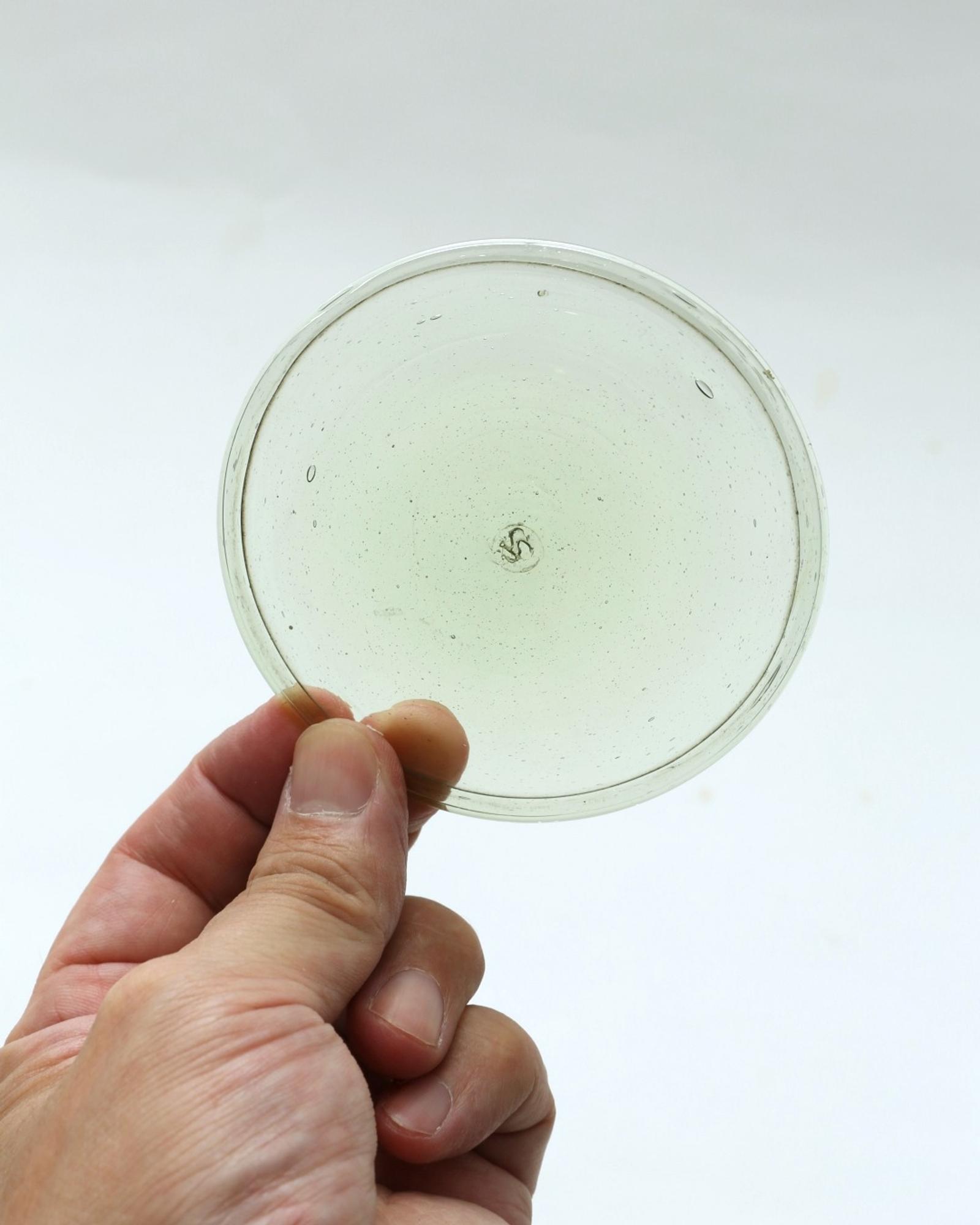
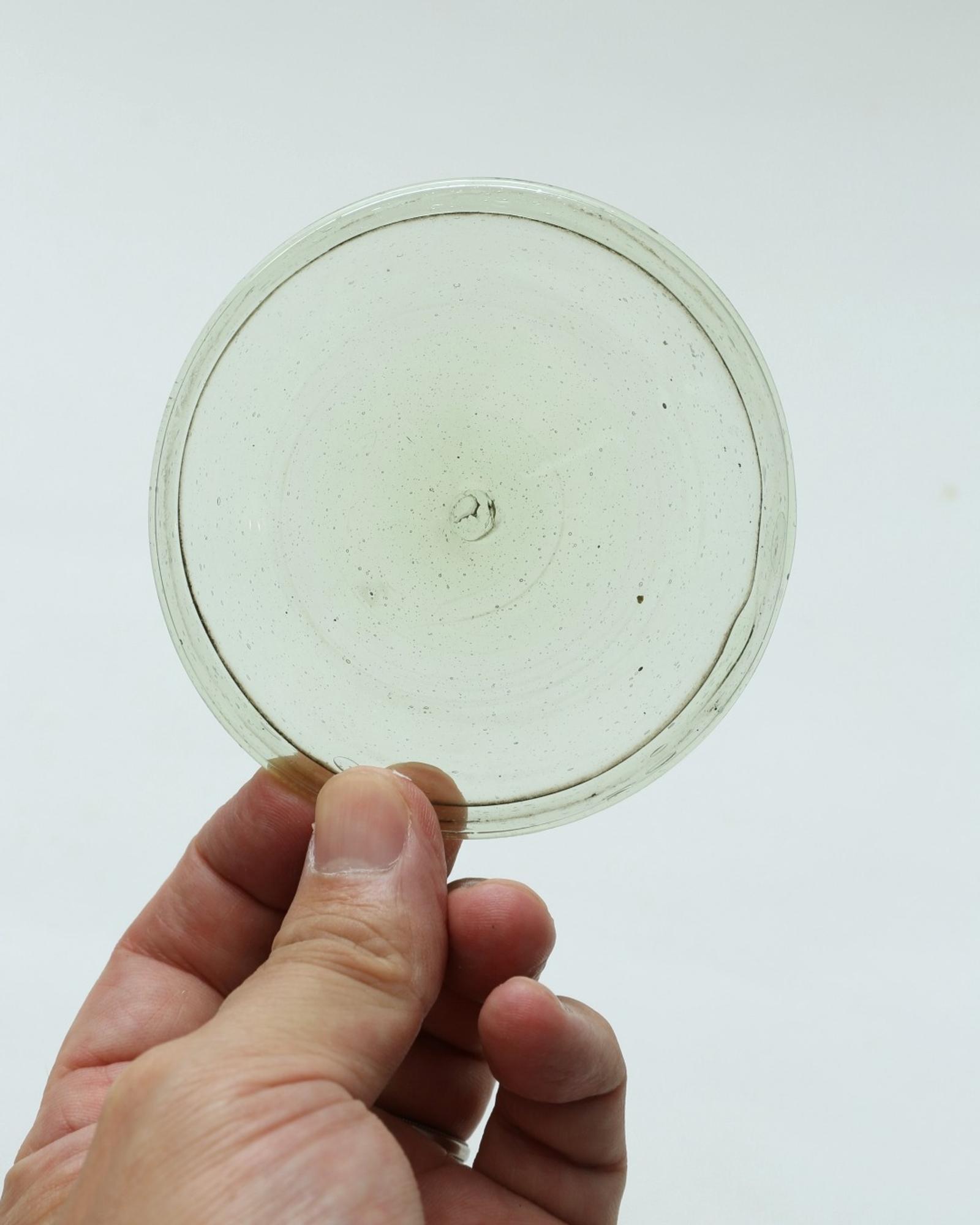
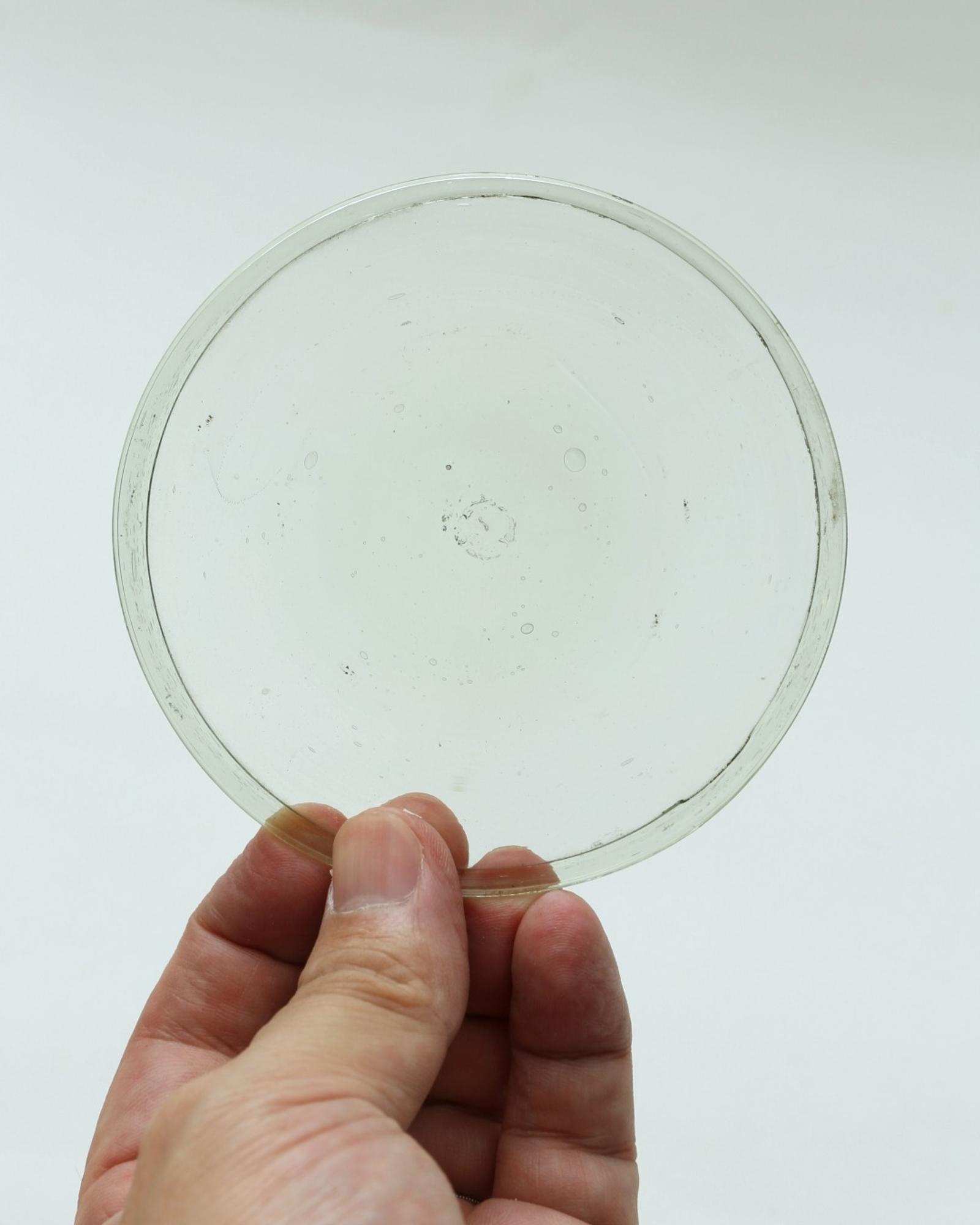
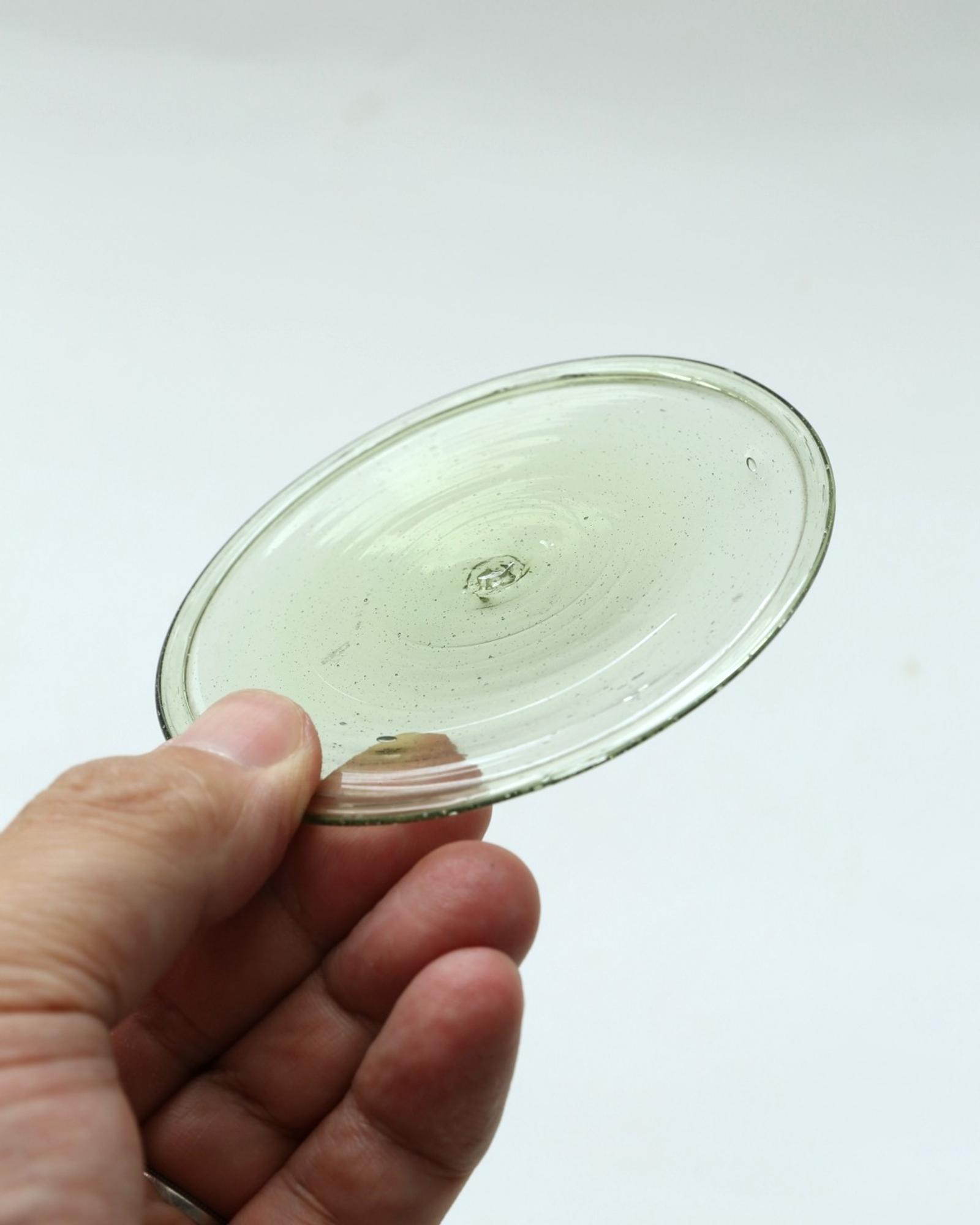
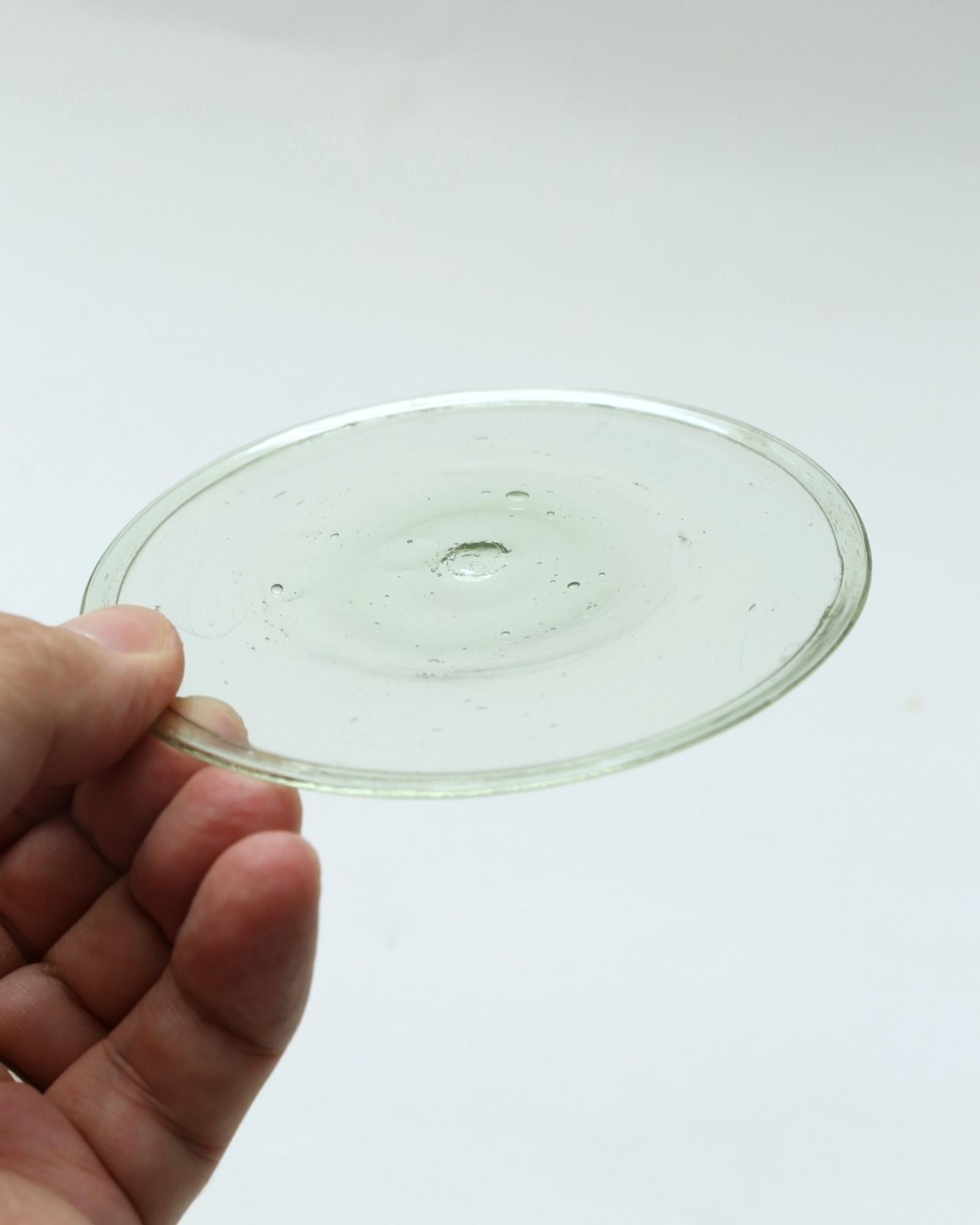
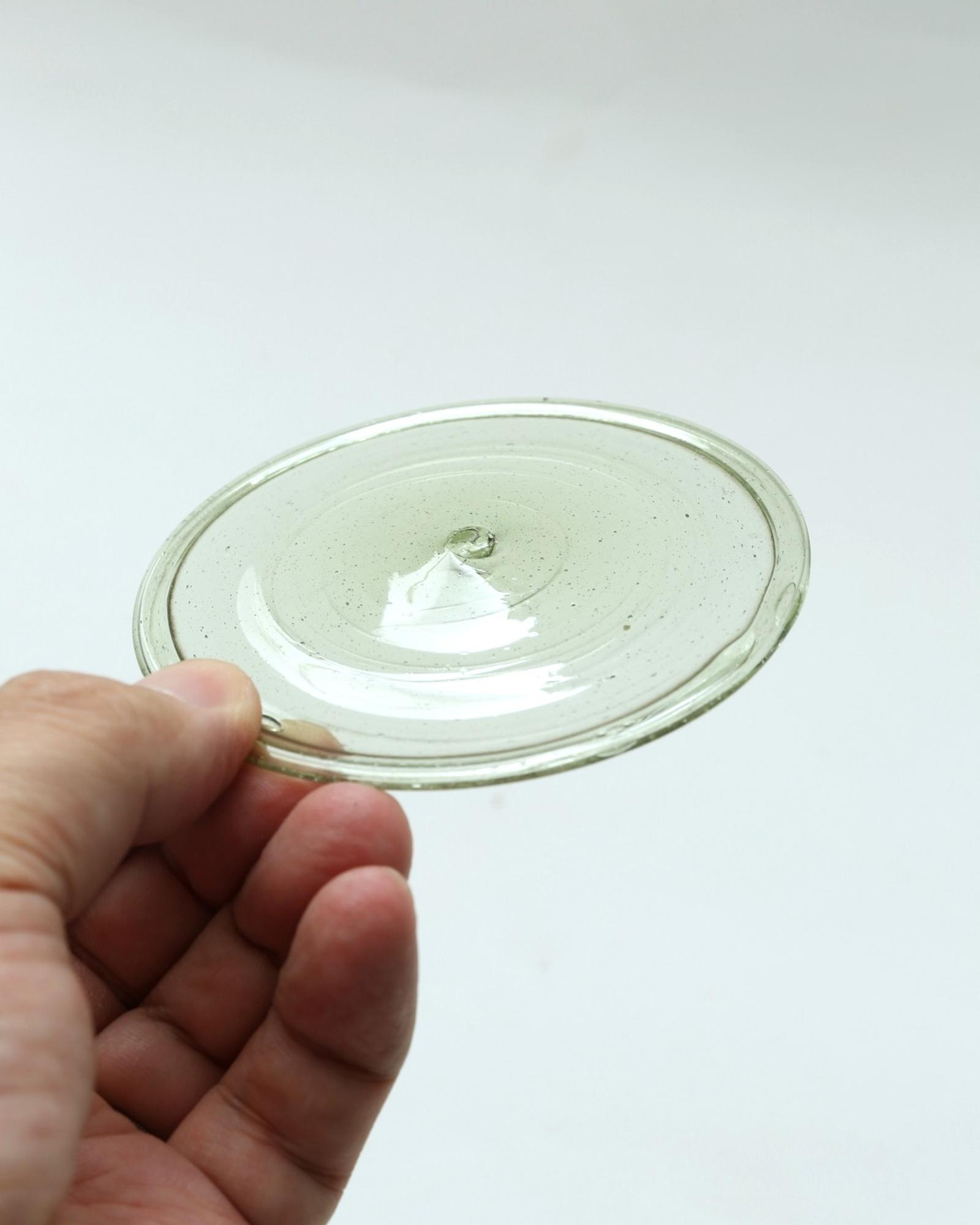
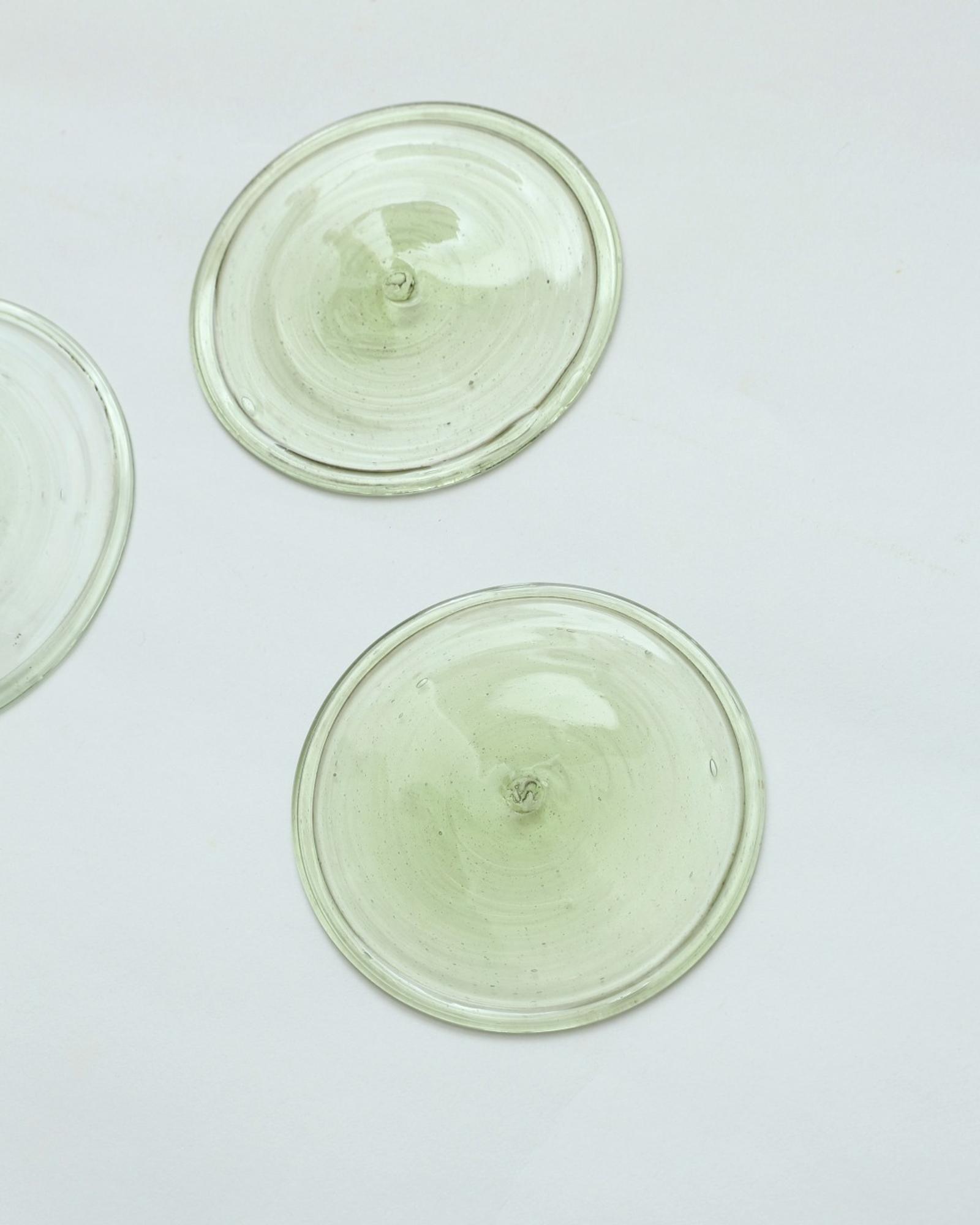
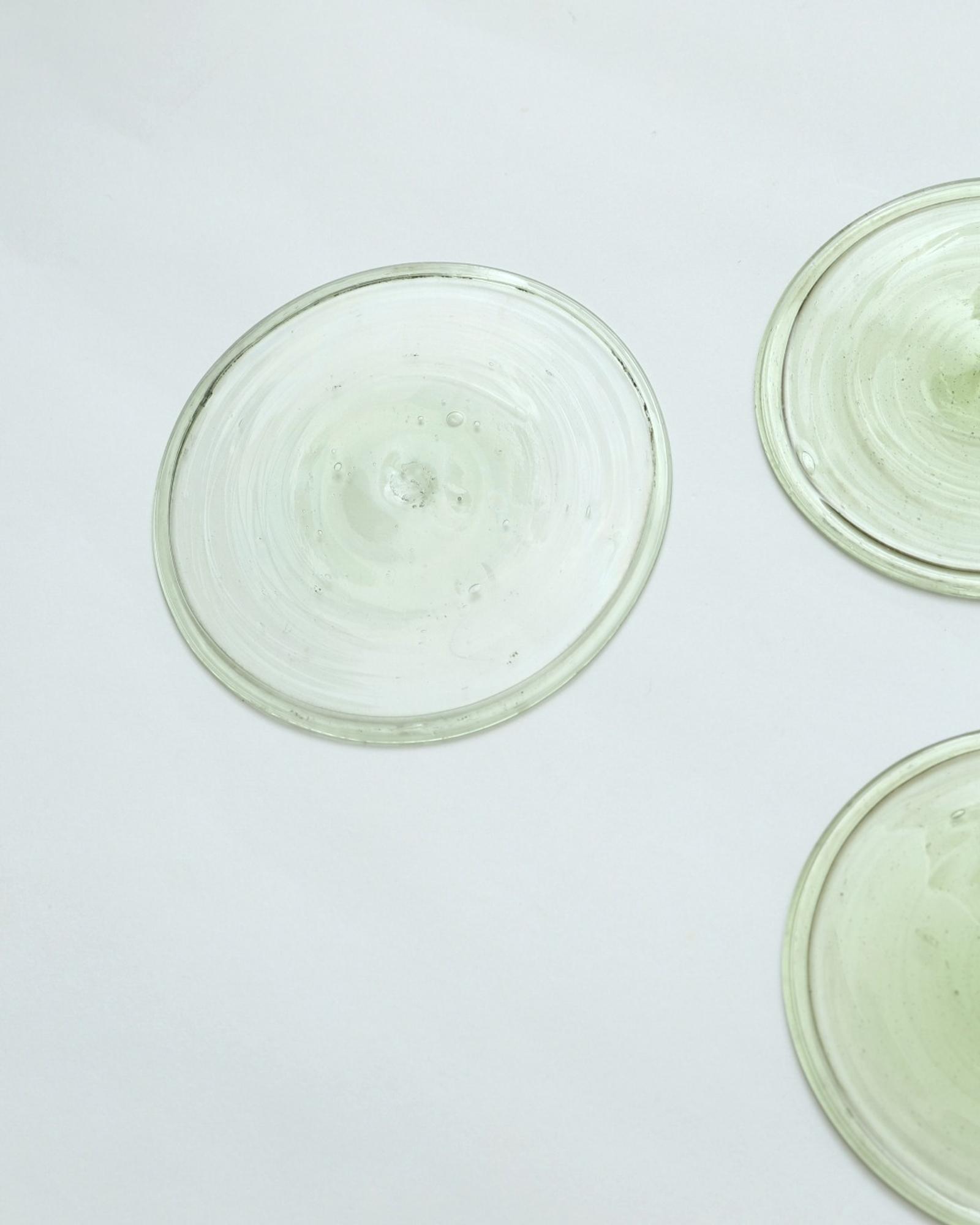
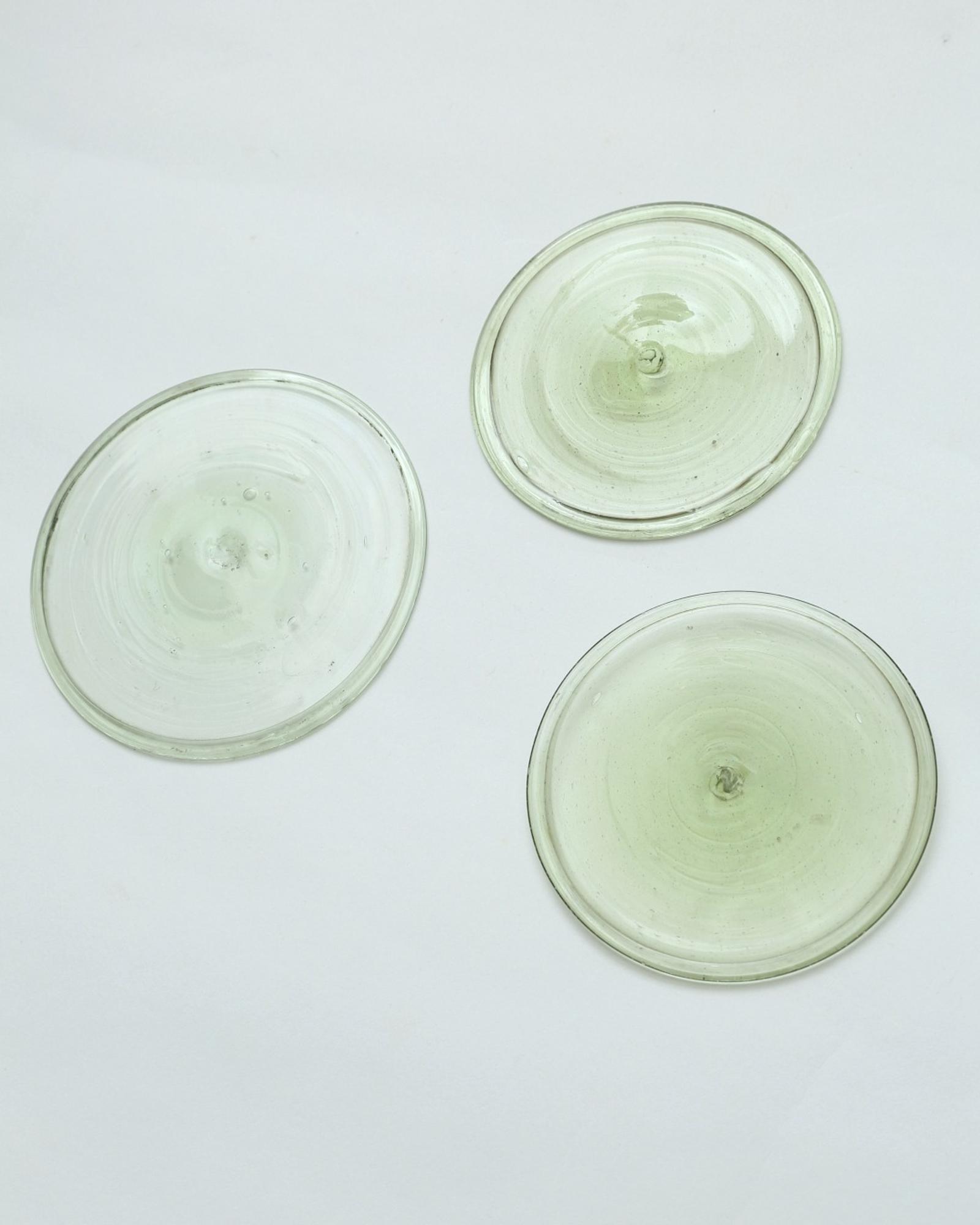
同心円状の吹き文様と、中心に残るポンティル跡が特徴的な、緑がかったガラス円盤3枚のまとまり。「クラウンガラス」は、吹き竿で作った泡状のガラス玉をポンティル棒に付け替え、高速で回転させながら遠心力で平らな円盤に広げる製法で、中心にはポンティル棒を切り離した跡(ブルズアイ)が厚く残ります。 近代的な板ガラスが普及する以前、教会や民家の窓には鉛の桟でこうした円盤ガラスを繋ぎ合わせた「鉛枠ガラス窓(リーデッドグレイジング)」が広く使われていました。丸みを帯びた縁と気泡を含んだ厚みに、手仕事らしい表情が残ります。3枚まとめての価格です。フランス、18〜19世紀。
A set of three greenish glass discs, notable for their concentric blown rings and the pontil mark remaining at the center. "Crown glass" was made by attaching a blown glass bubble to a pontil rod and spinning it at high speed, letting centrifugal force flatten it into a disc; the thick mark left where the pontil rod was snapped off remains at the center (a "bullseye"). Before modern flat glass became widespread, church and cottage windows commonly used "leaded glazing" — panes like these joined together with strips of lead. The rounded edges and bubble-filled thickness carry the character of hand work.Priced for the set of three. France, 18th–19th century.