
金工
鉄製 風見鶏(台座付き)
Germany / 19th century
W39cm × H47cm (55.5cm overall with base) / Base: W9cm × D30cm × H8.5cm
¥79,000 (tax in)
Stock: 01
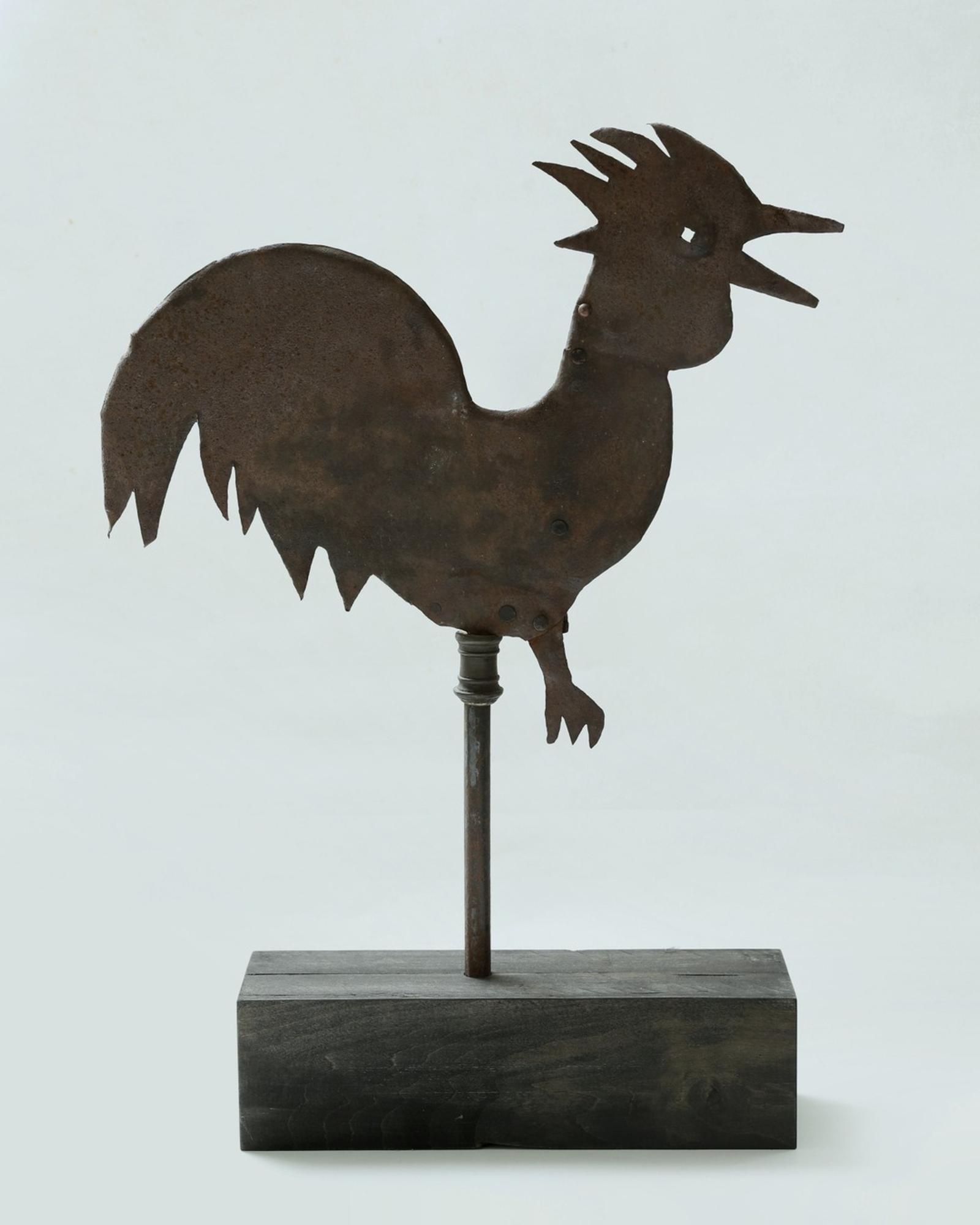
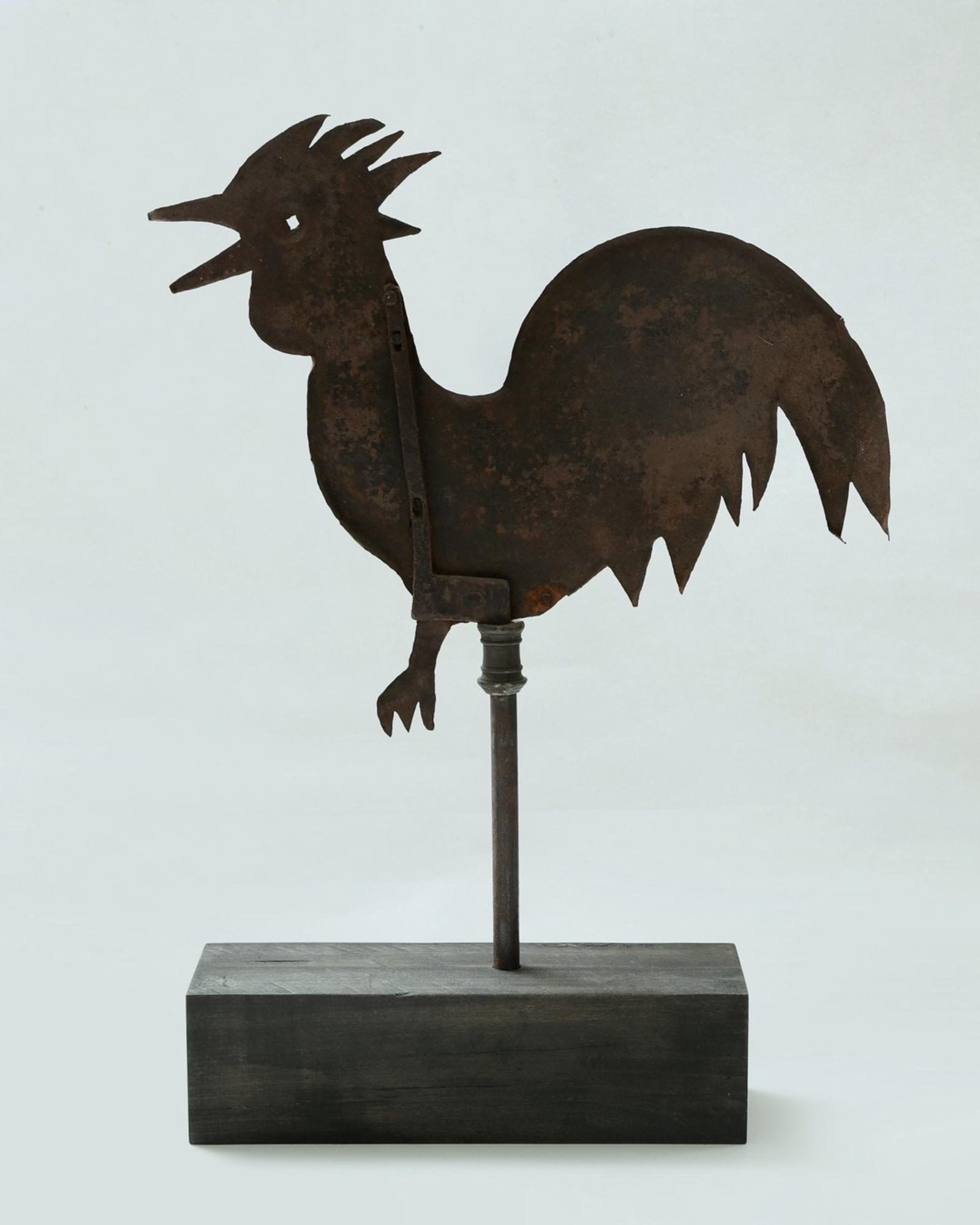
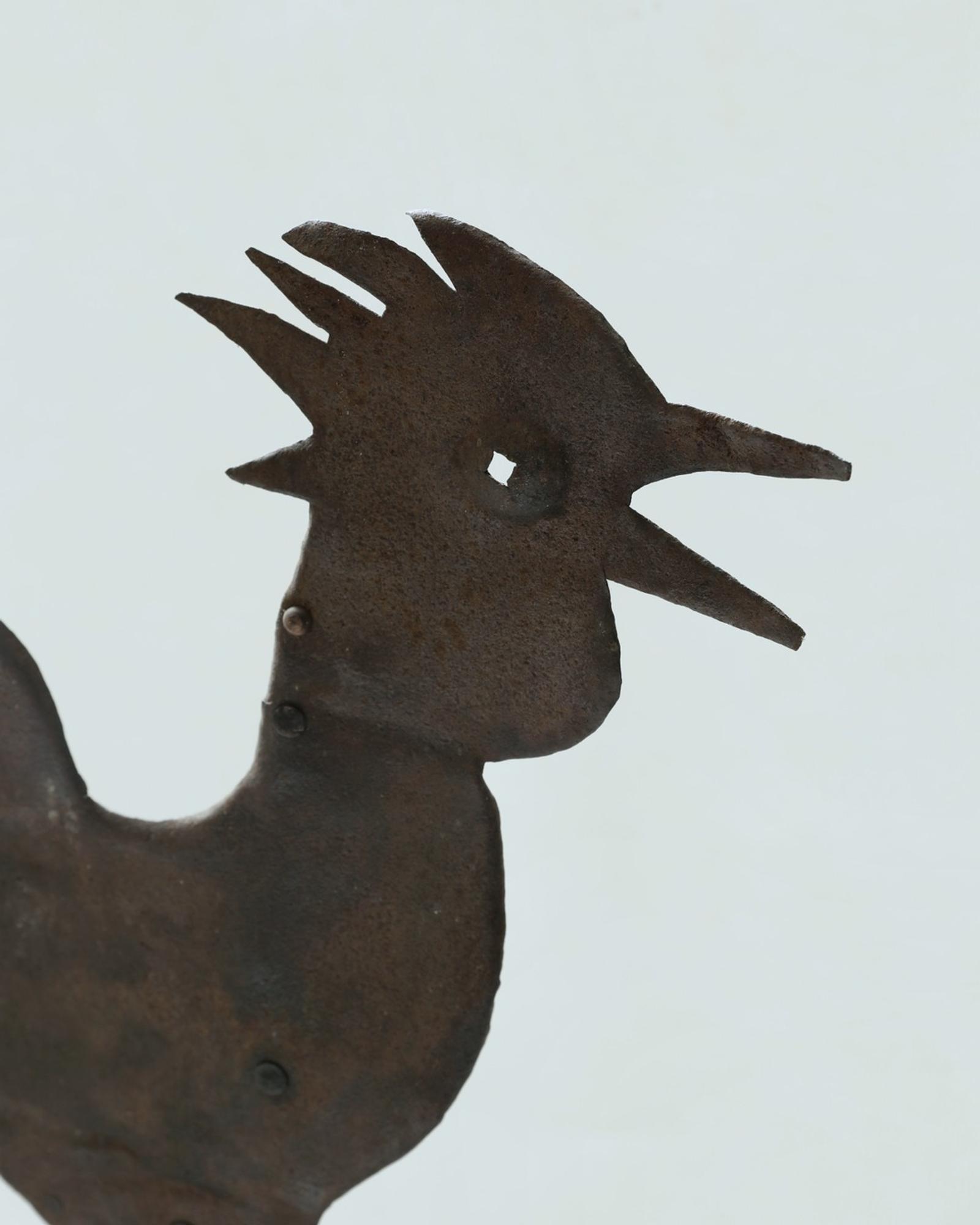
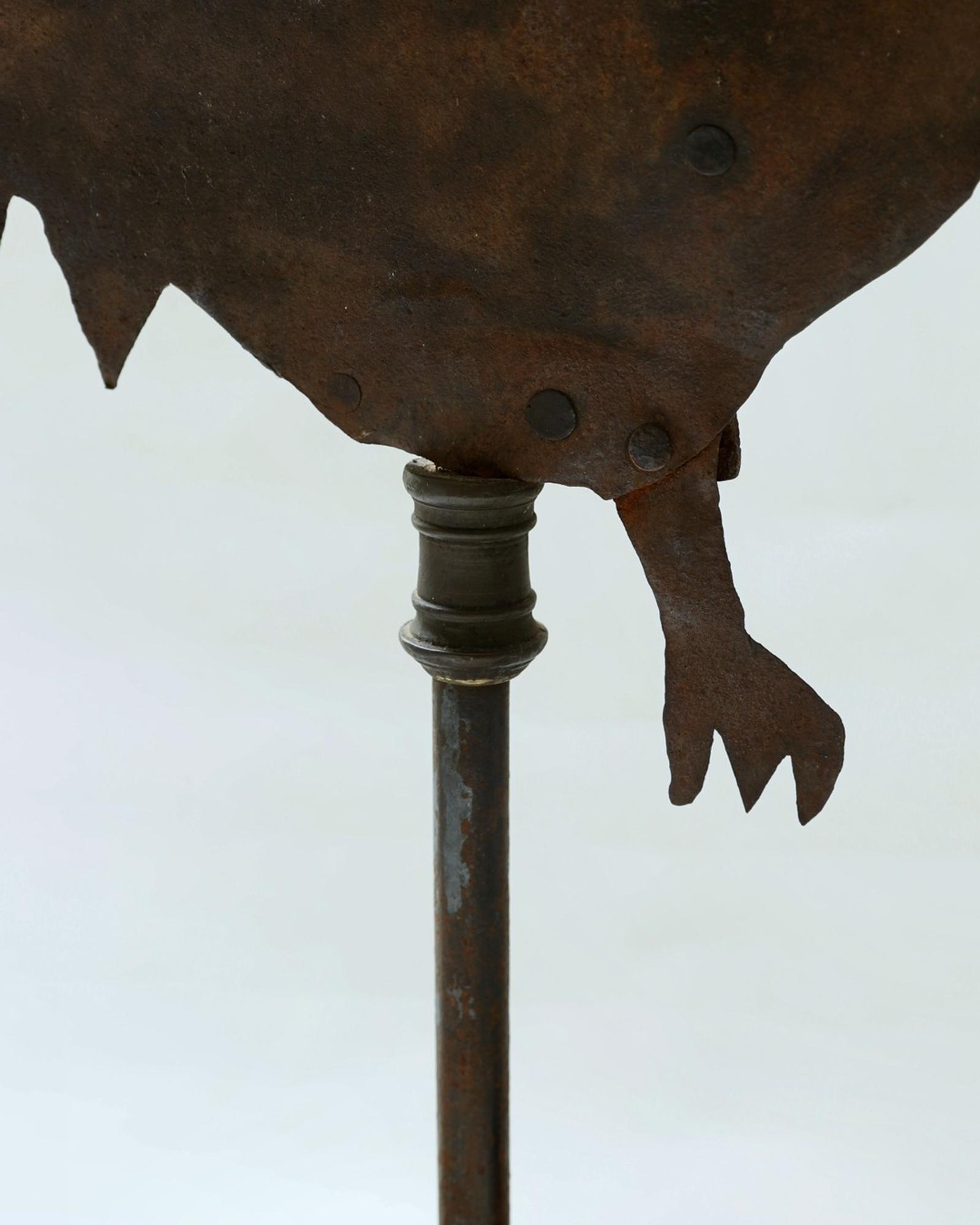
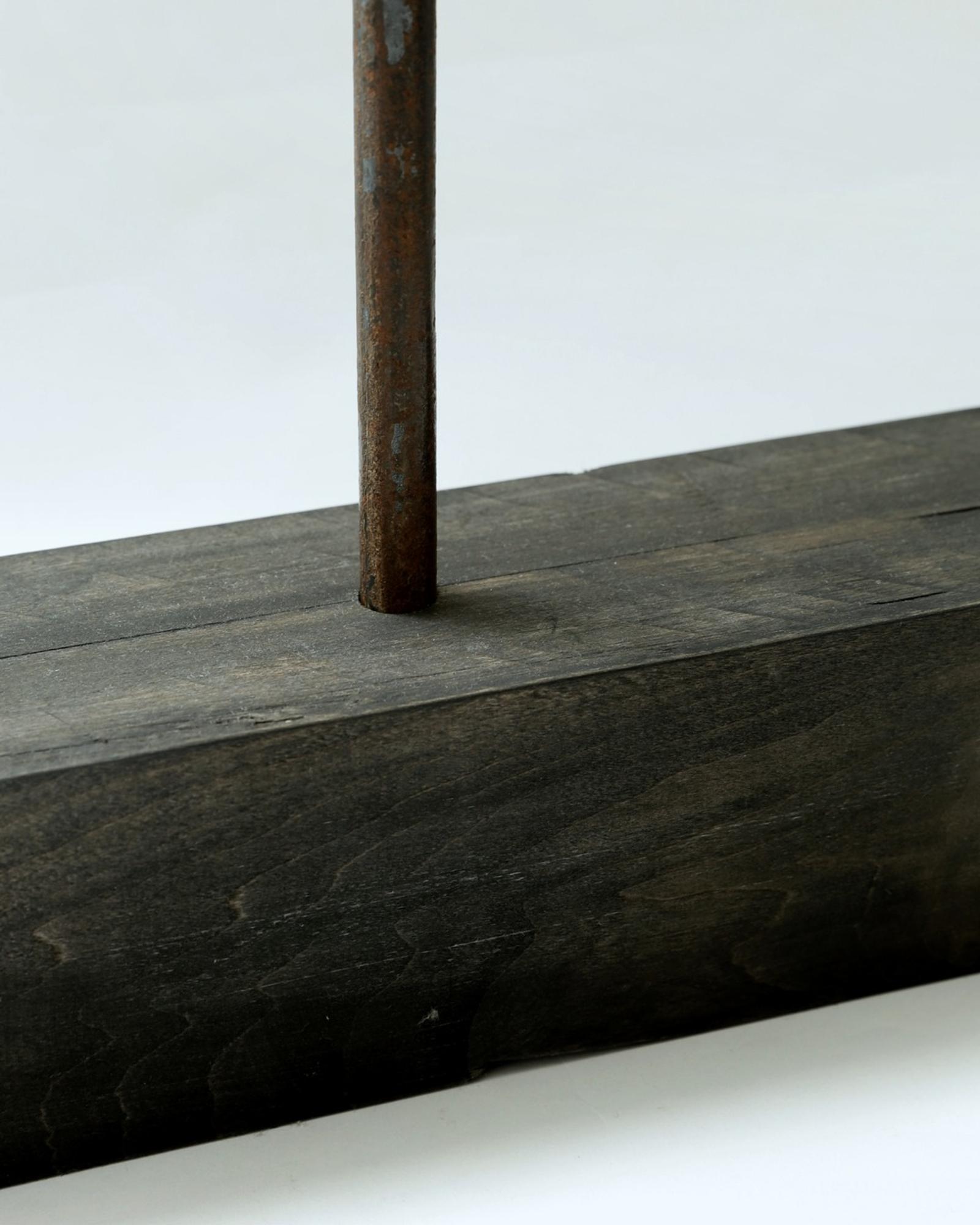
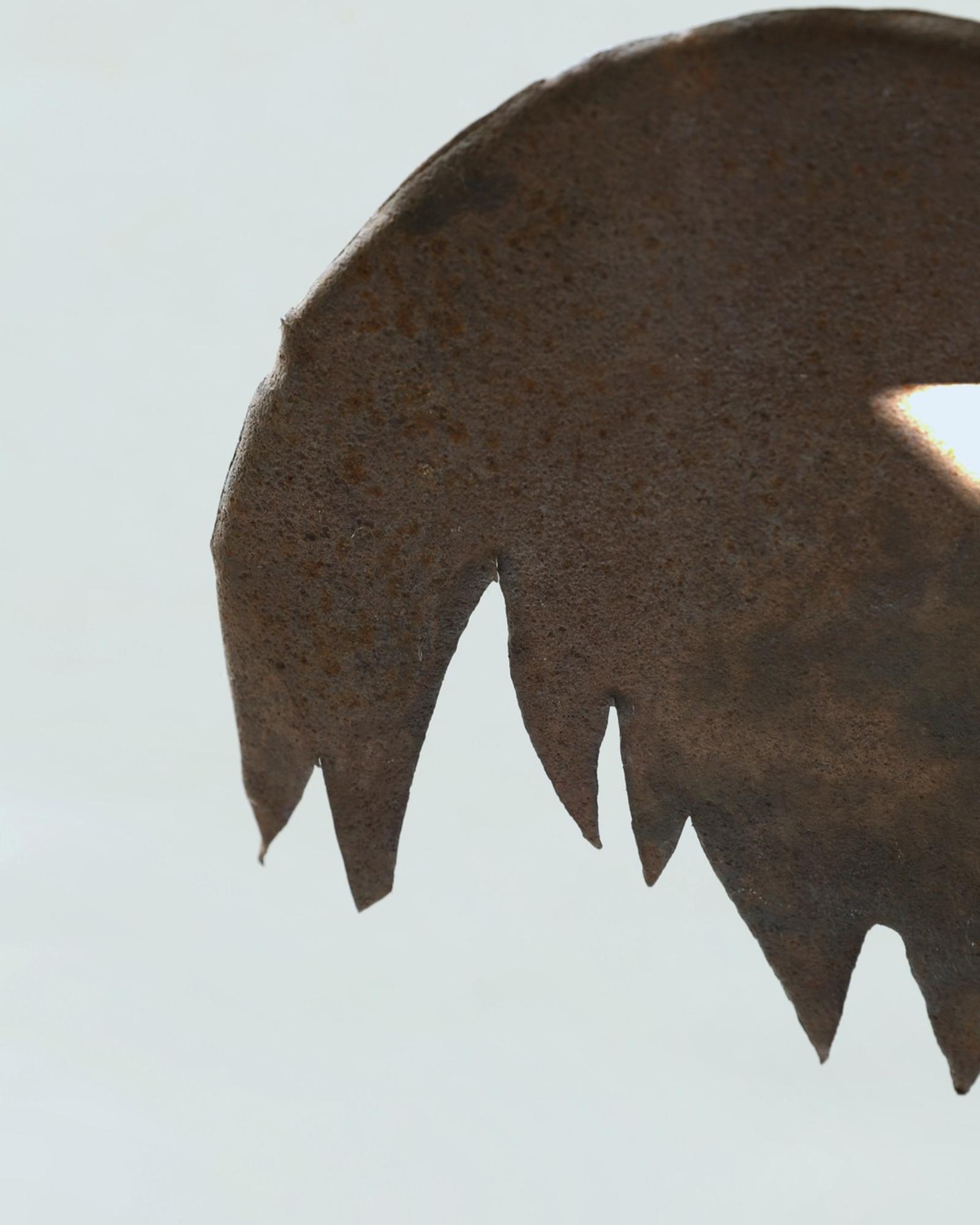
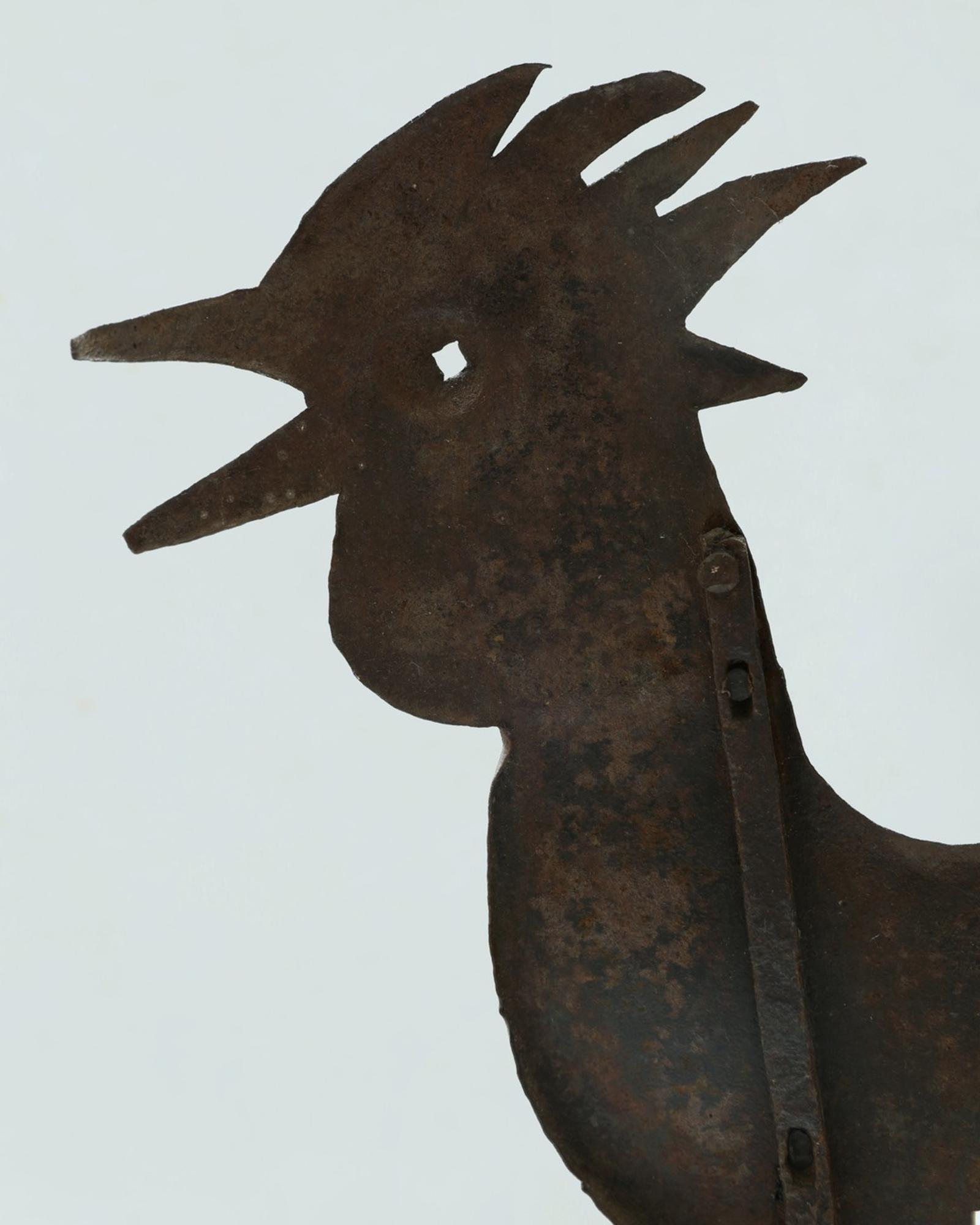
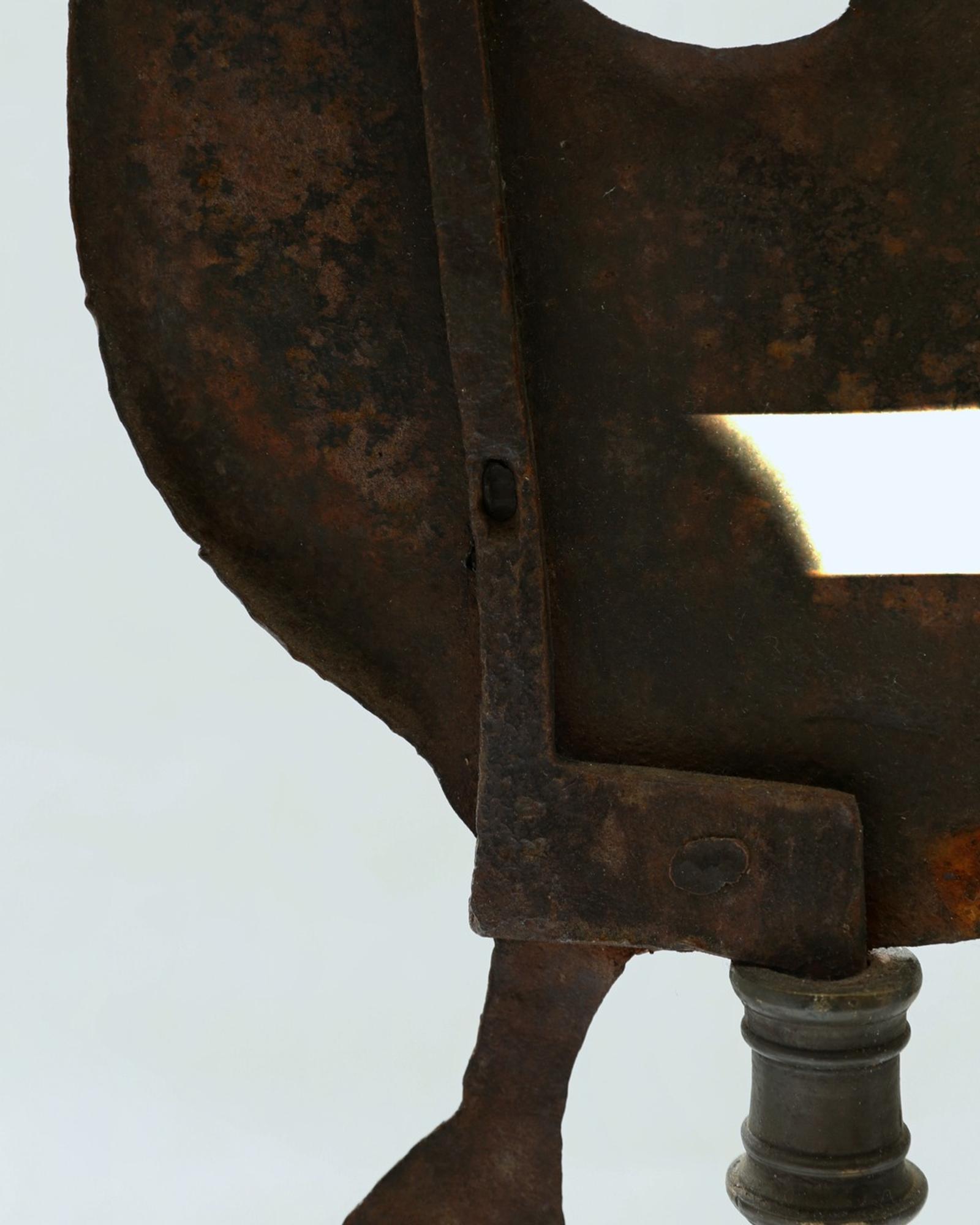
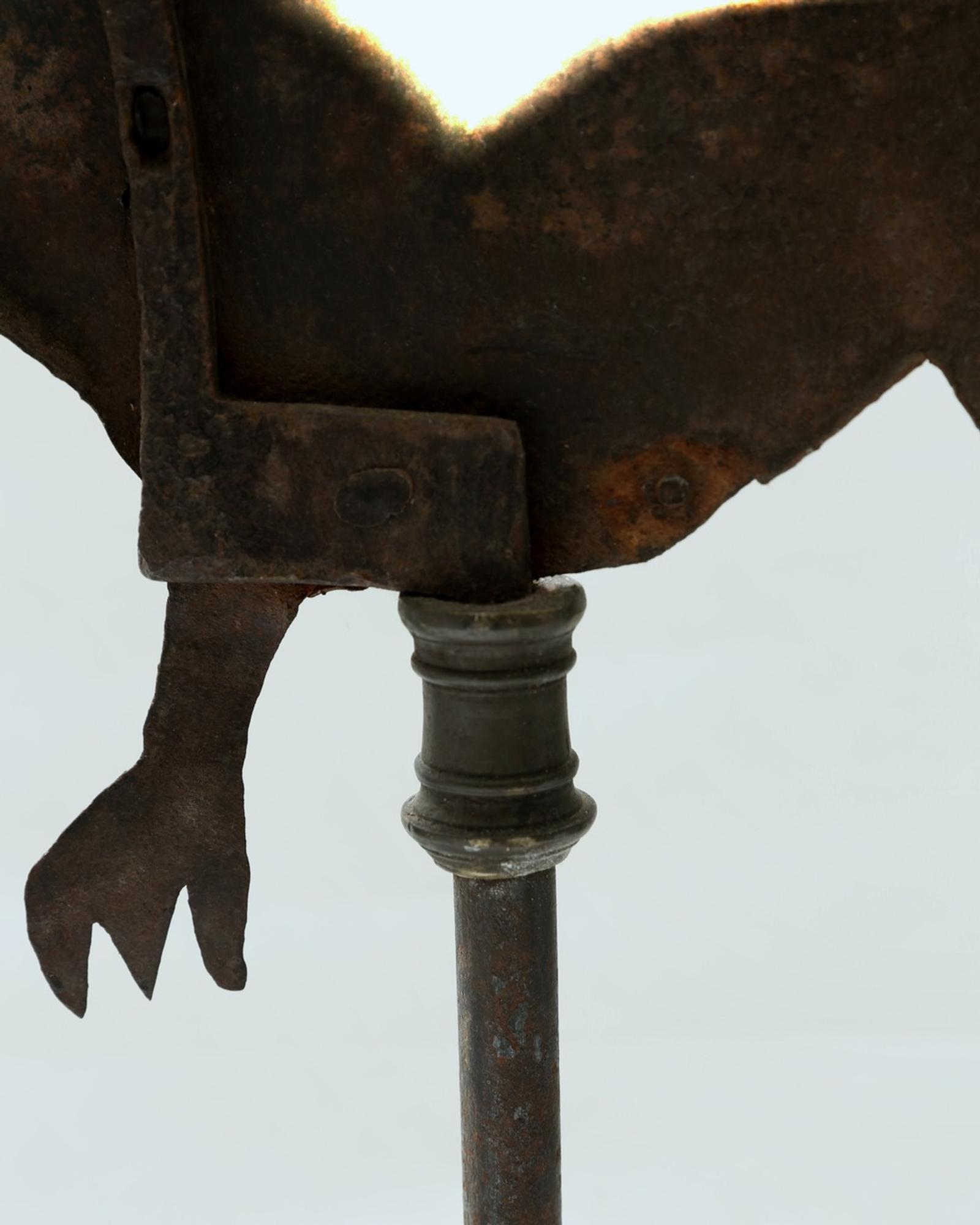
一枚の鉄板を切り抜いて作られた、雄鶏形の風見鶏(ジルエット)。屋根の上に据えられた風見鶏は、方角を知らせる実用具であると同時に、鶏の鳴き声が夜明けを告げることから「目覚めと警戒」の象徴ともされ、キリスト教圏では教会建築の尖塔に据える伝統も持ちます。屋根の上で長年風雨にさらされてきた錆と、鶏冠やしっぽの大胆なシルエットに、素朴な民藝の力強さがあります。 鏨で鉄板を切り出し鋲留めで組み上げる手仕事の跡が随所に見られ、こうした板金細工の風見鶏は今日、ヨーロッパの民俗美術を代表するモチーフの一つとして蒐集の対象となっています。木製台座は取り外し可能で、棚や卓上に飾ってお楽しみいただけます。ドイツ、19世紀。
A rooster-form weathervane cut from a single sheet of iron. Mounted on a rooftop, a weathervane served the practical purpose of indicating wind direction, while the rooster's crow at dawn also made it a symbol of watchfulness and awakening — a form traditionally placed atop church spires in Christian architecture. The rust built up over years of exposure to wind and rain, together with the bold silhouette of its comb and tail, carries the raw strength of folk craft. The surface still shows the maker's hand: a sheet of iron cut with a chisel and assembled with rivets. Hand-cut sheet-iron weathervanes like this remain a recognized motif within European folk art today. The wooden stand is removable, so it can be displayed on a shelf or tabletop. Germany, 19th century.