
布・染織
クバ族 ラフィア アップリケ布
D.R. Congo / Early-to-mid 20th century
W60cm × L295cm
¥79,000 (tax in)
Stock: 01
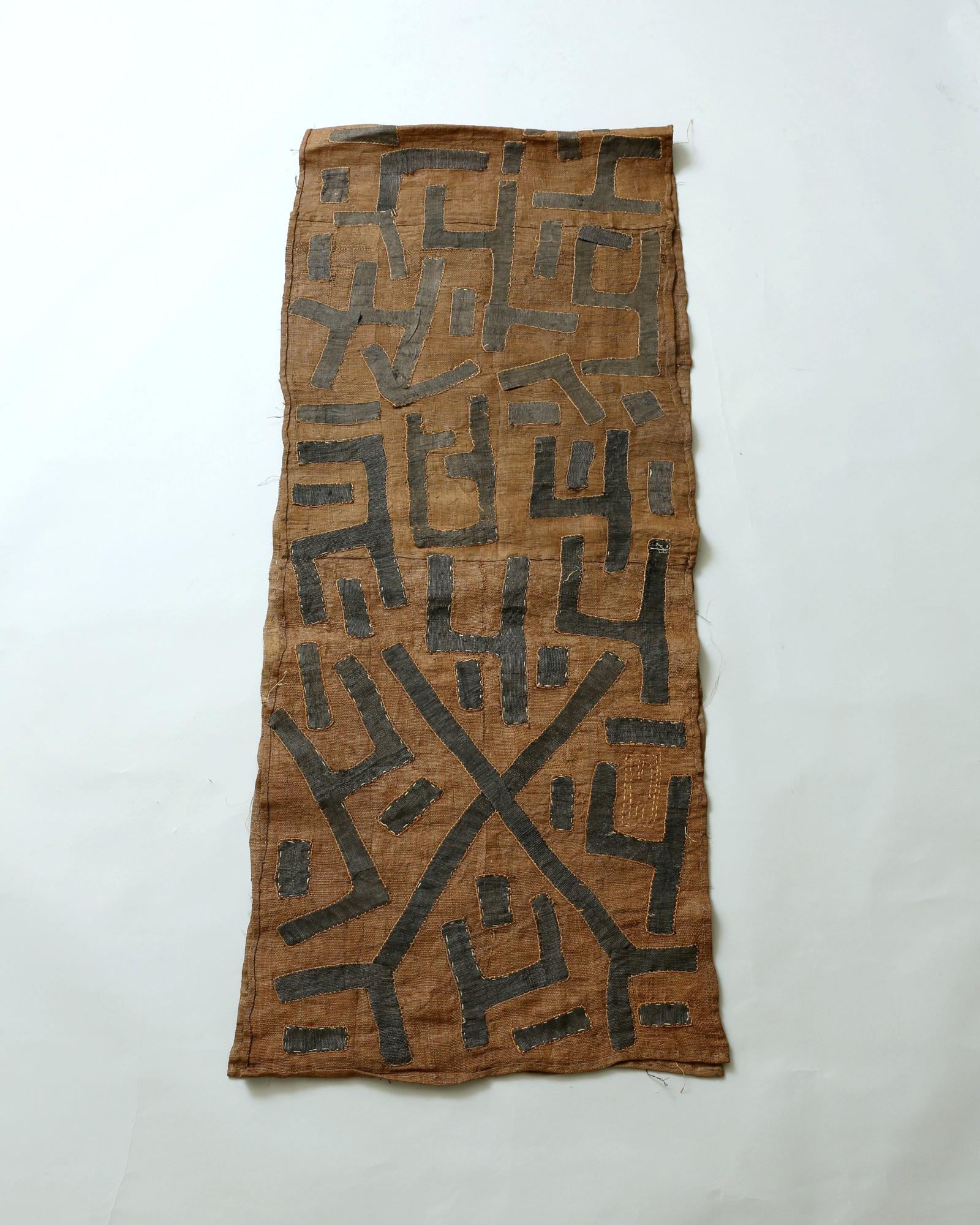
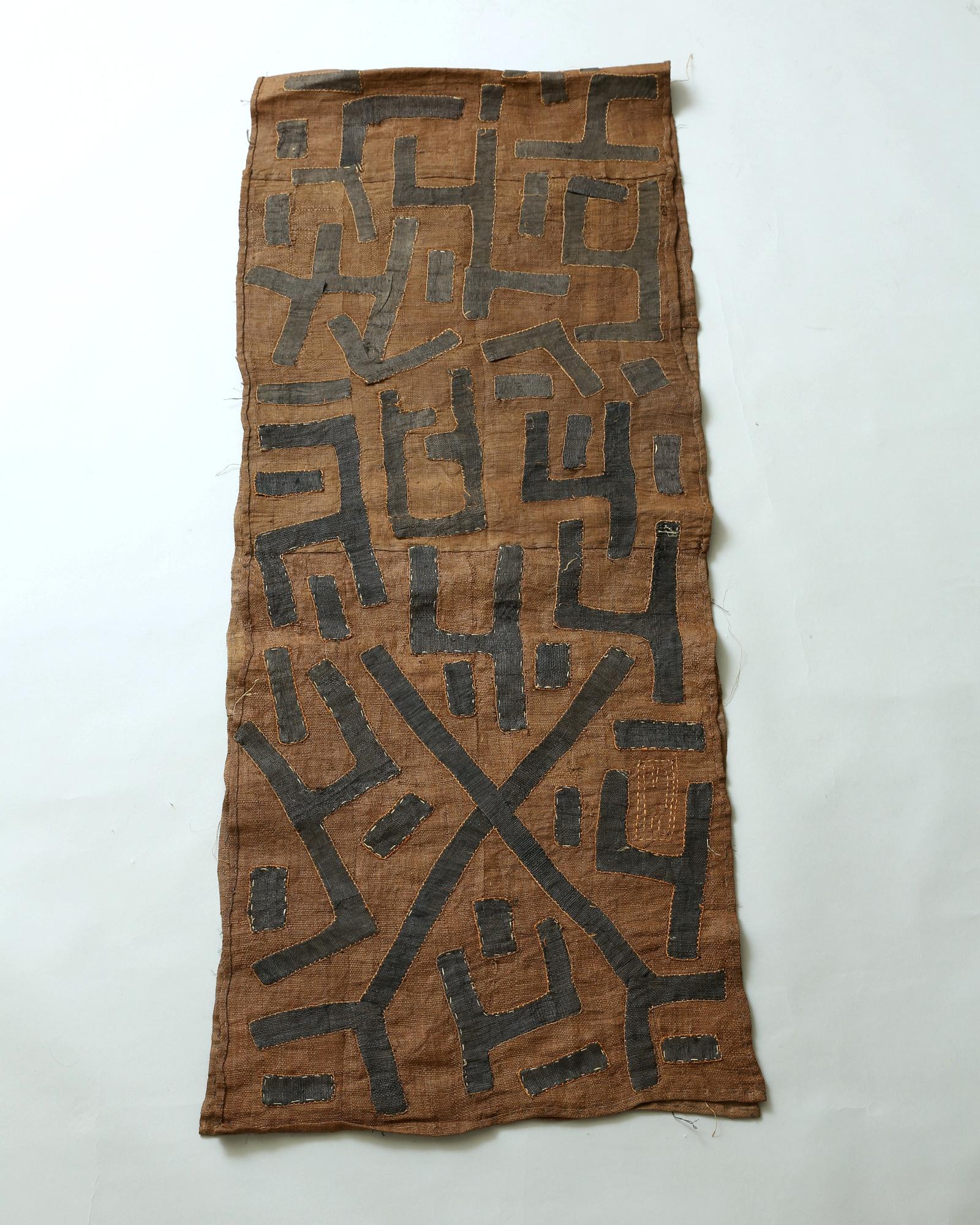
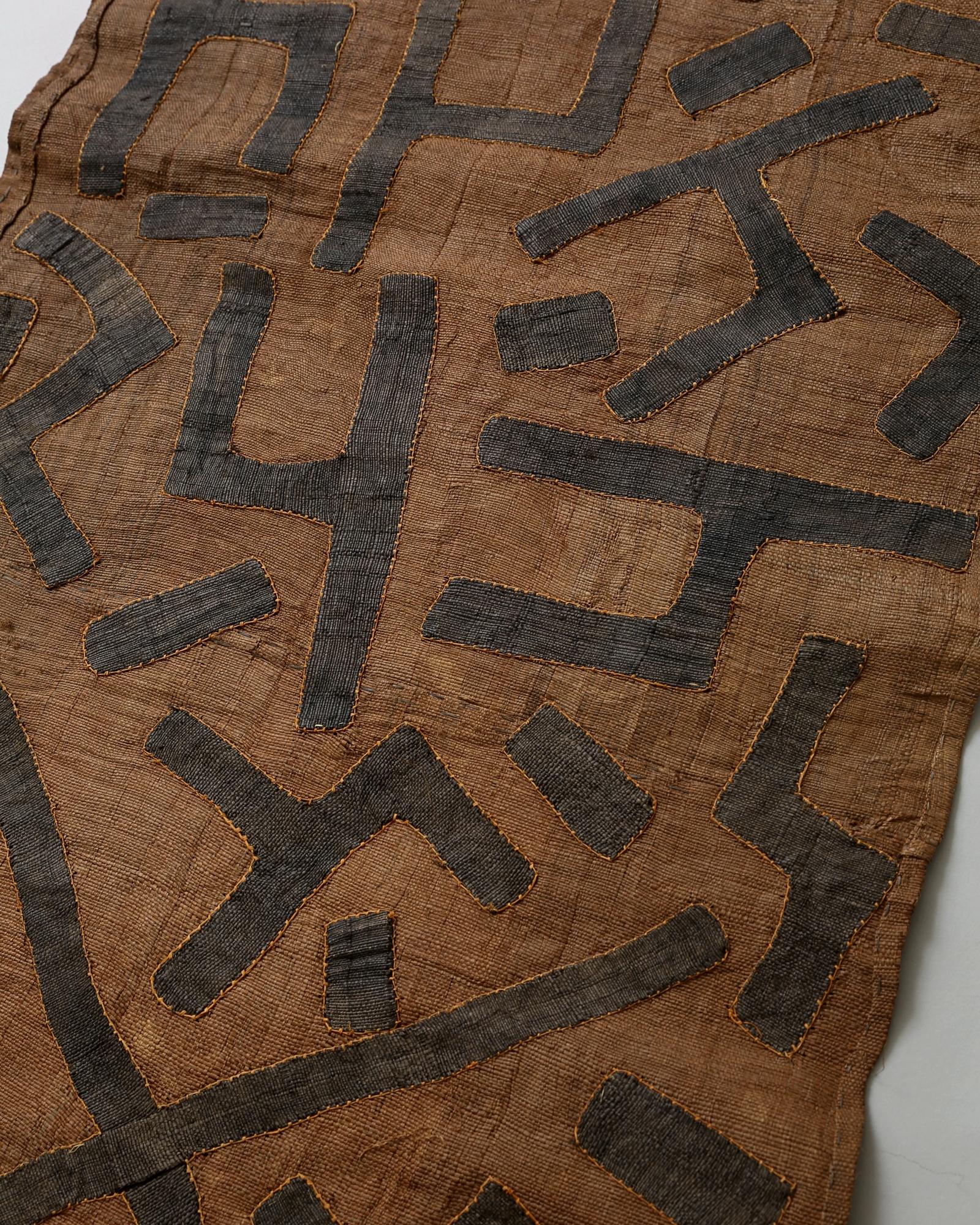
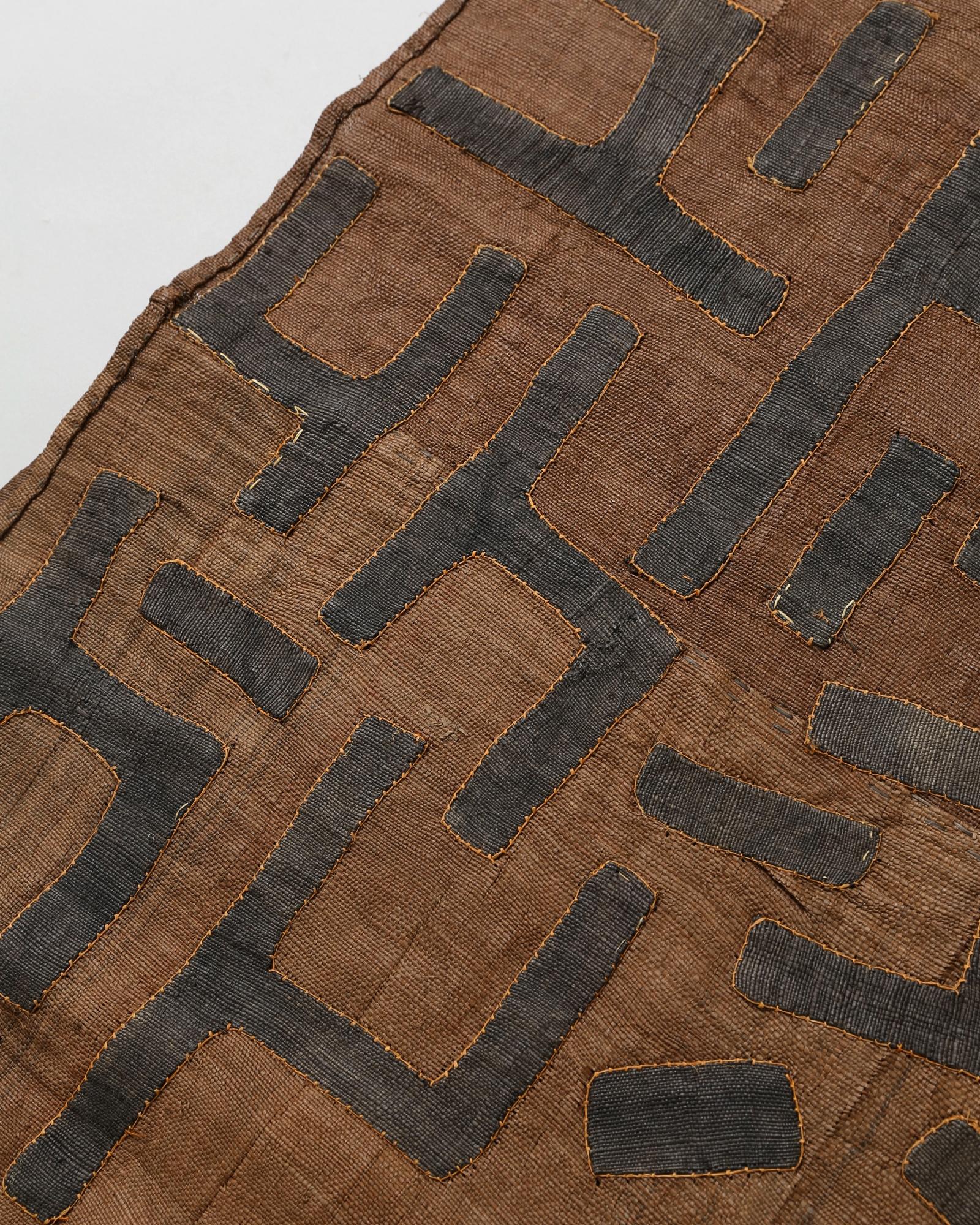
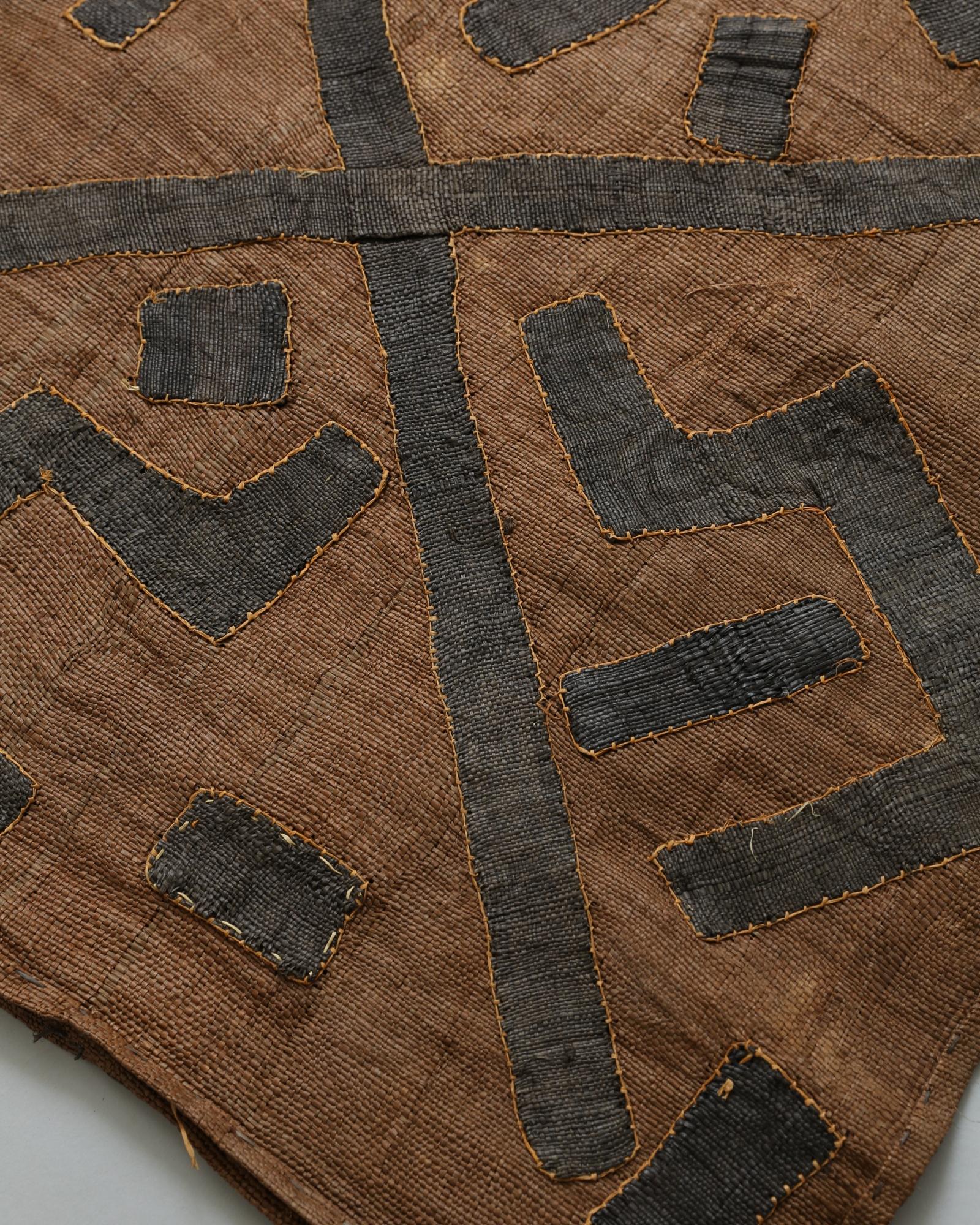
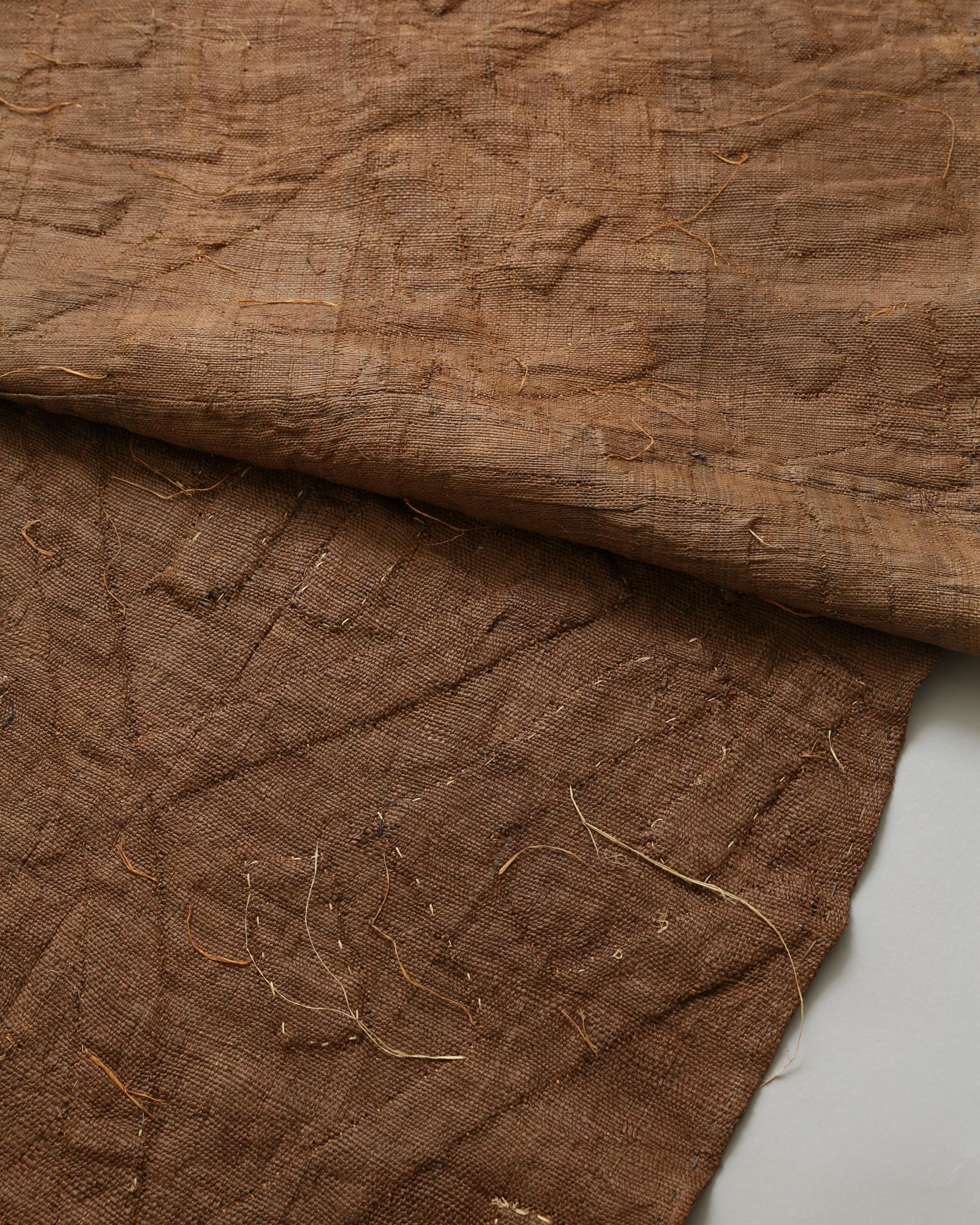
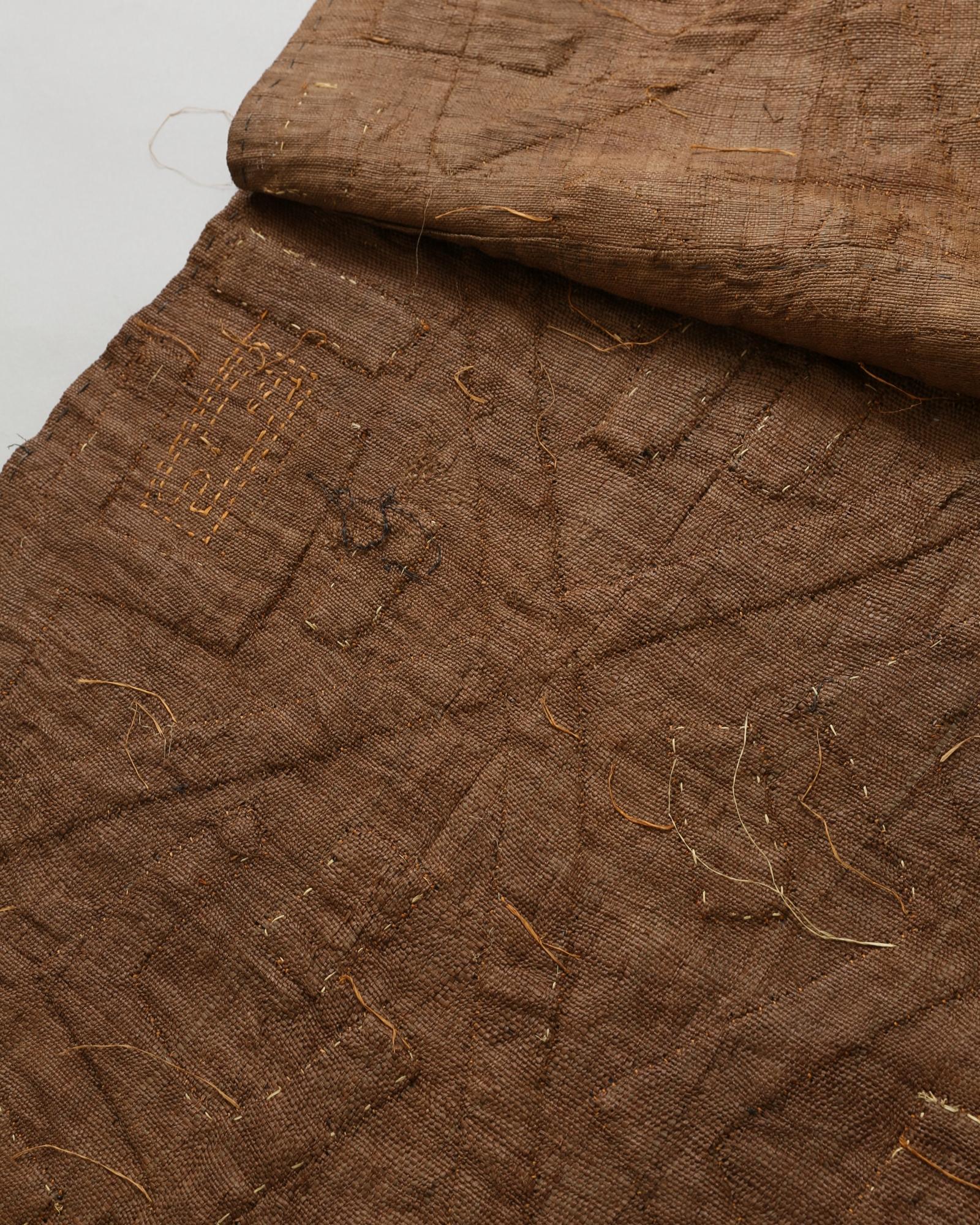
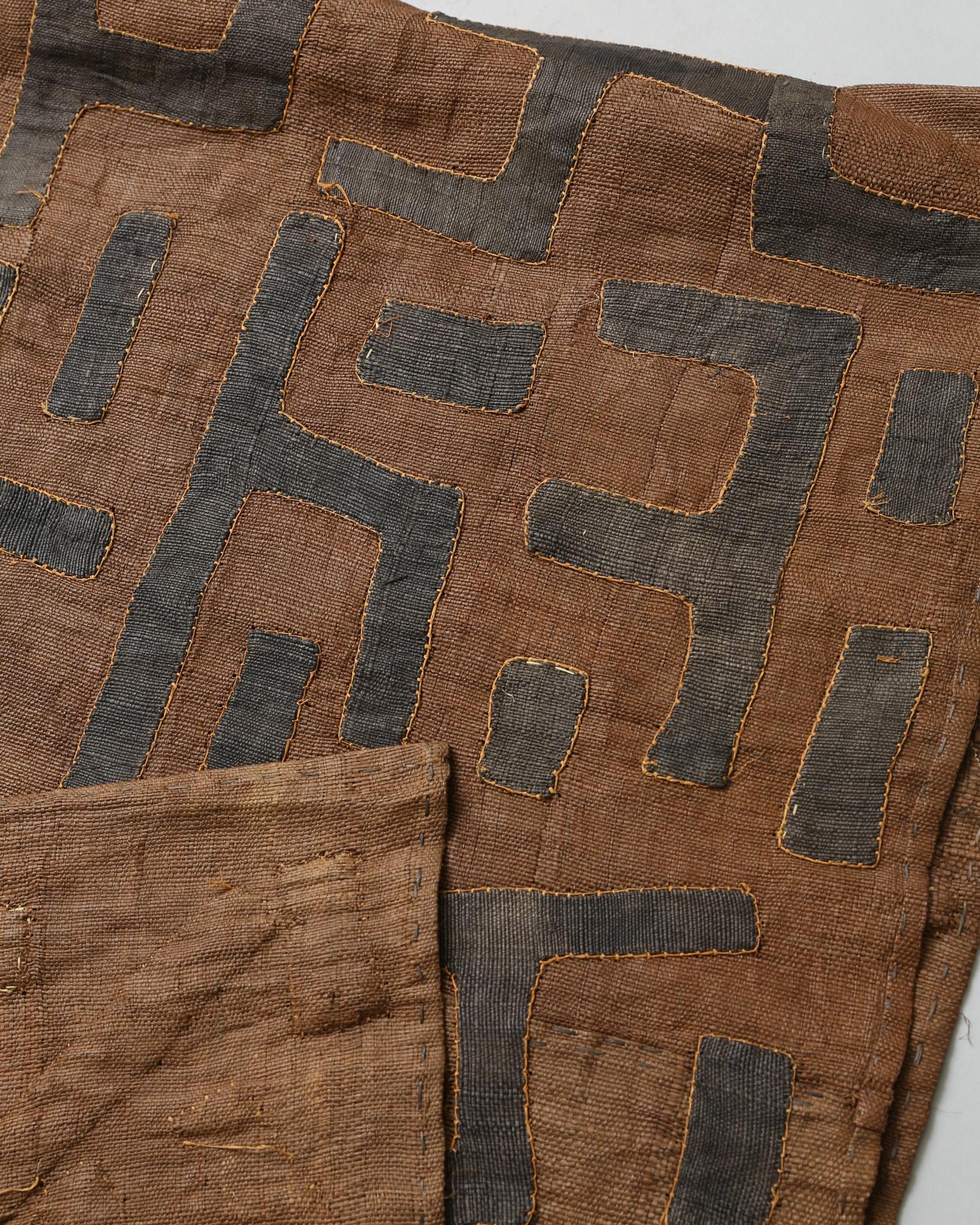
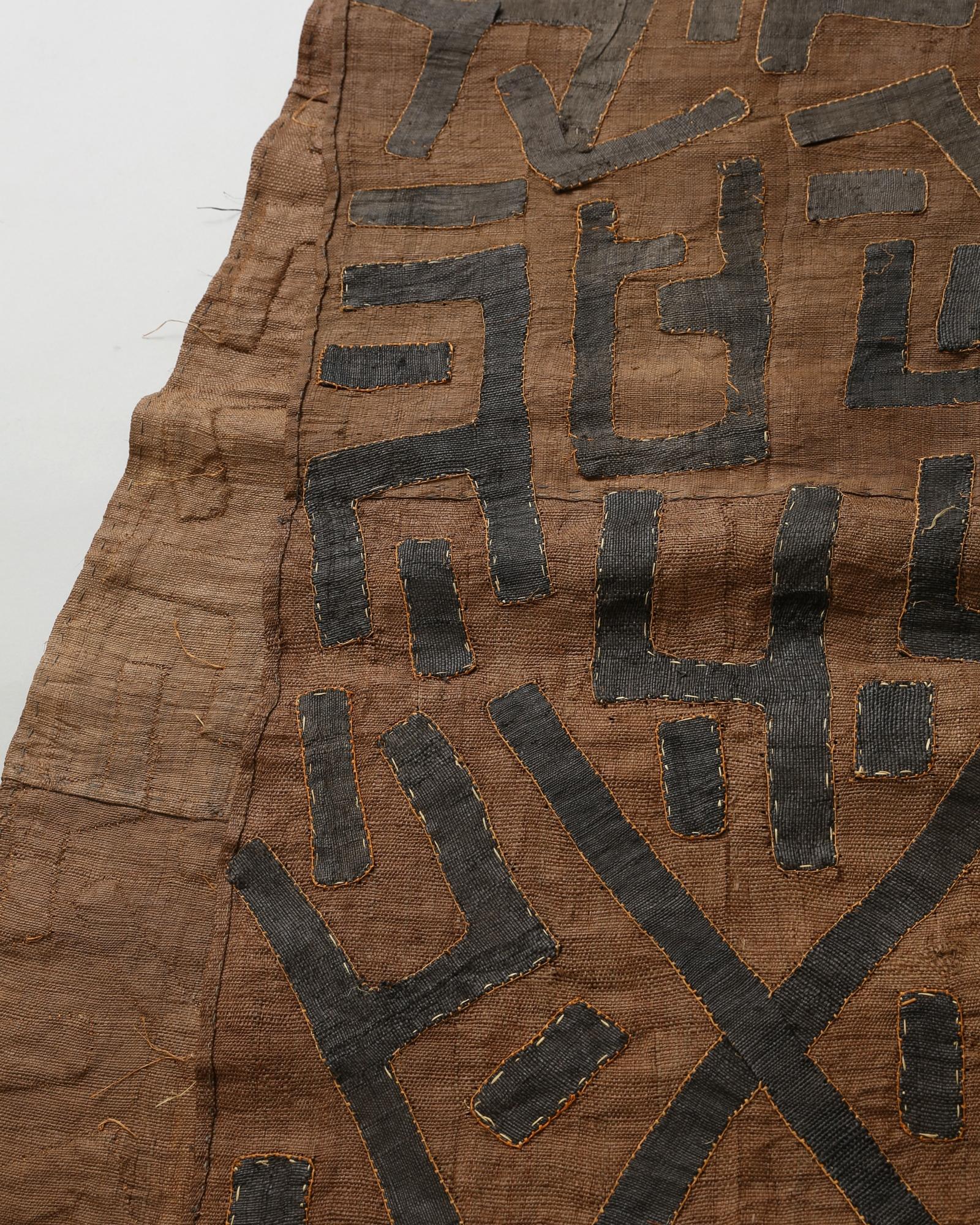
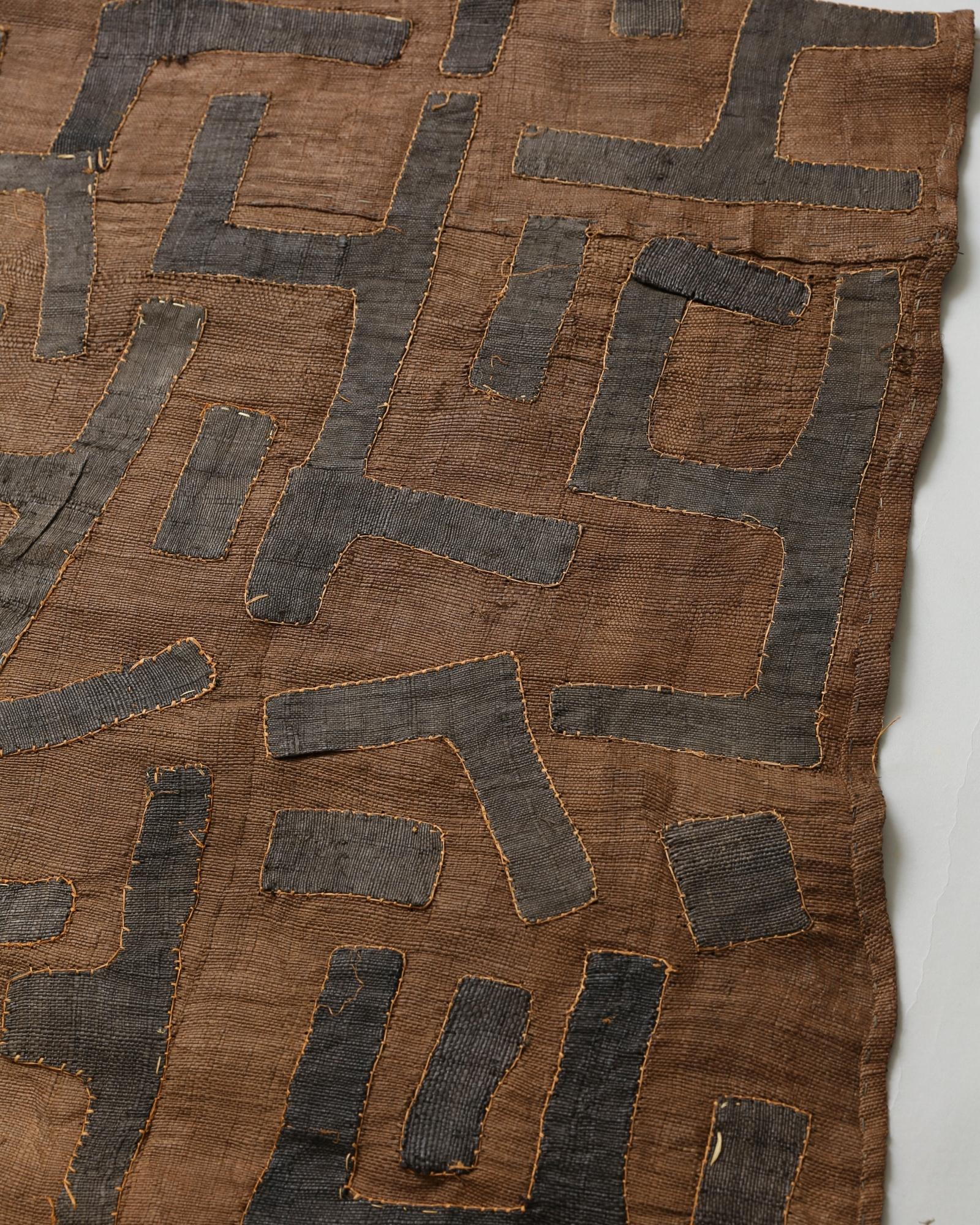
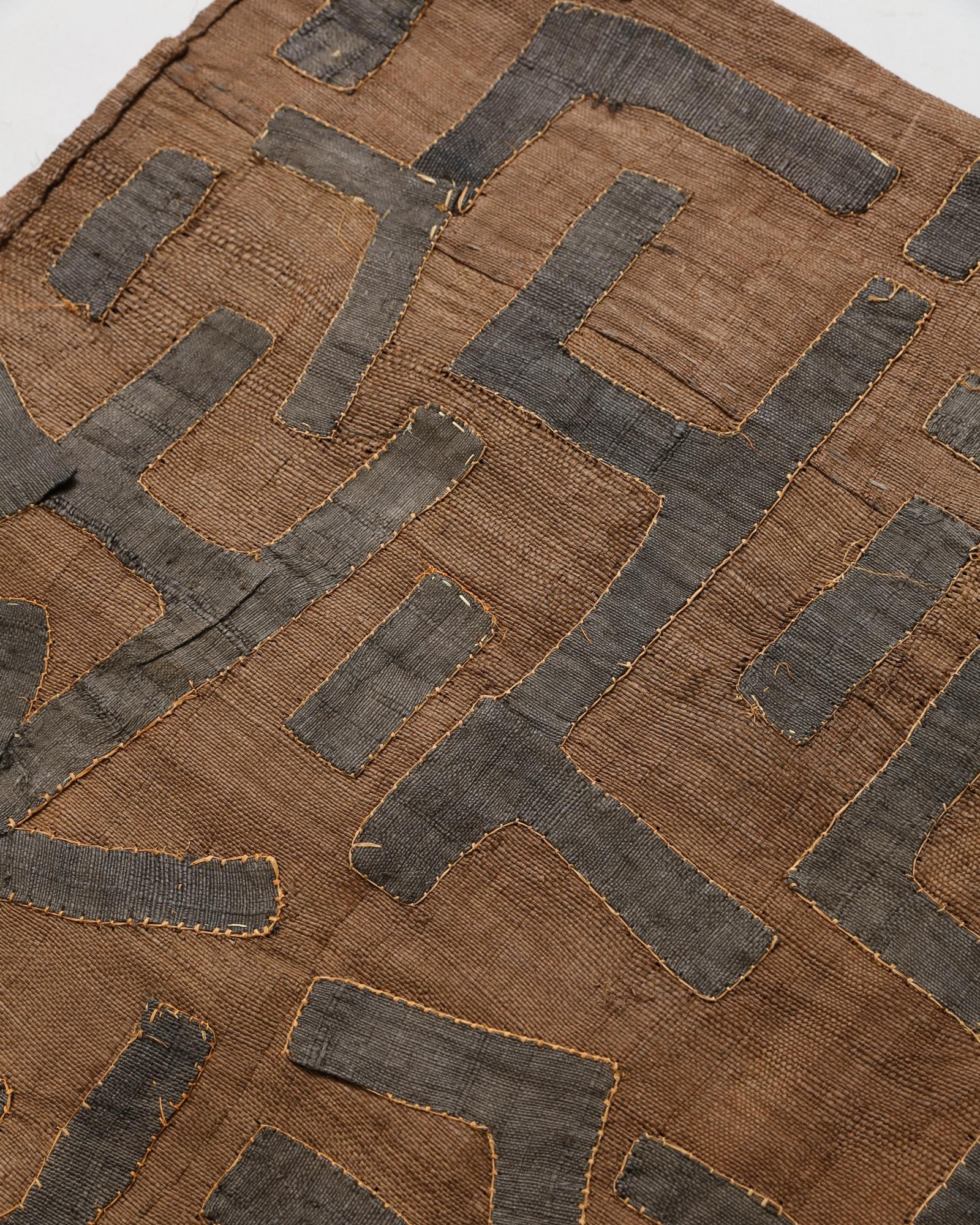
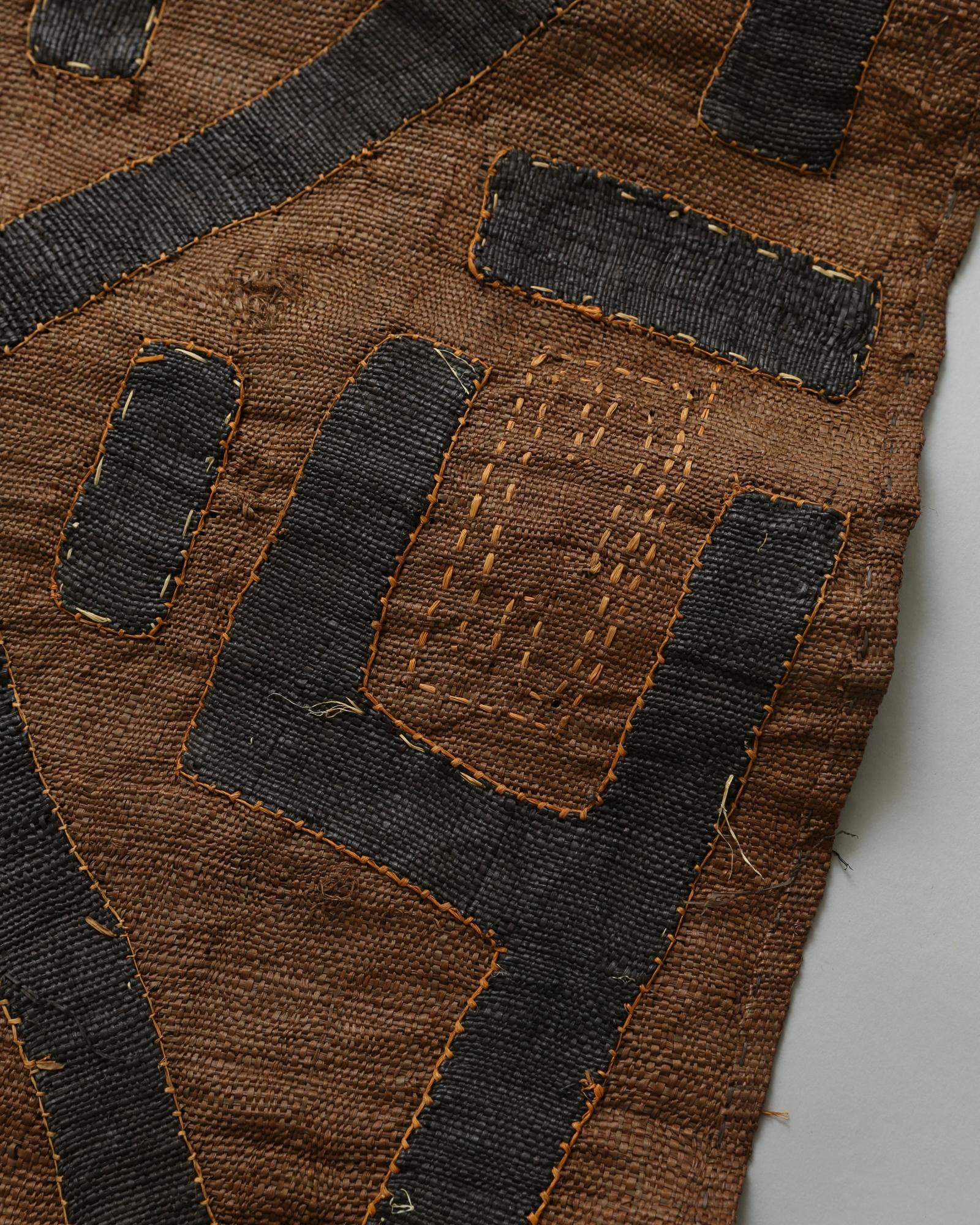
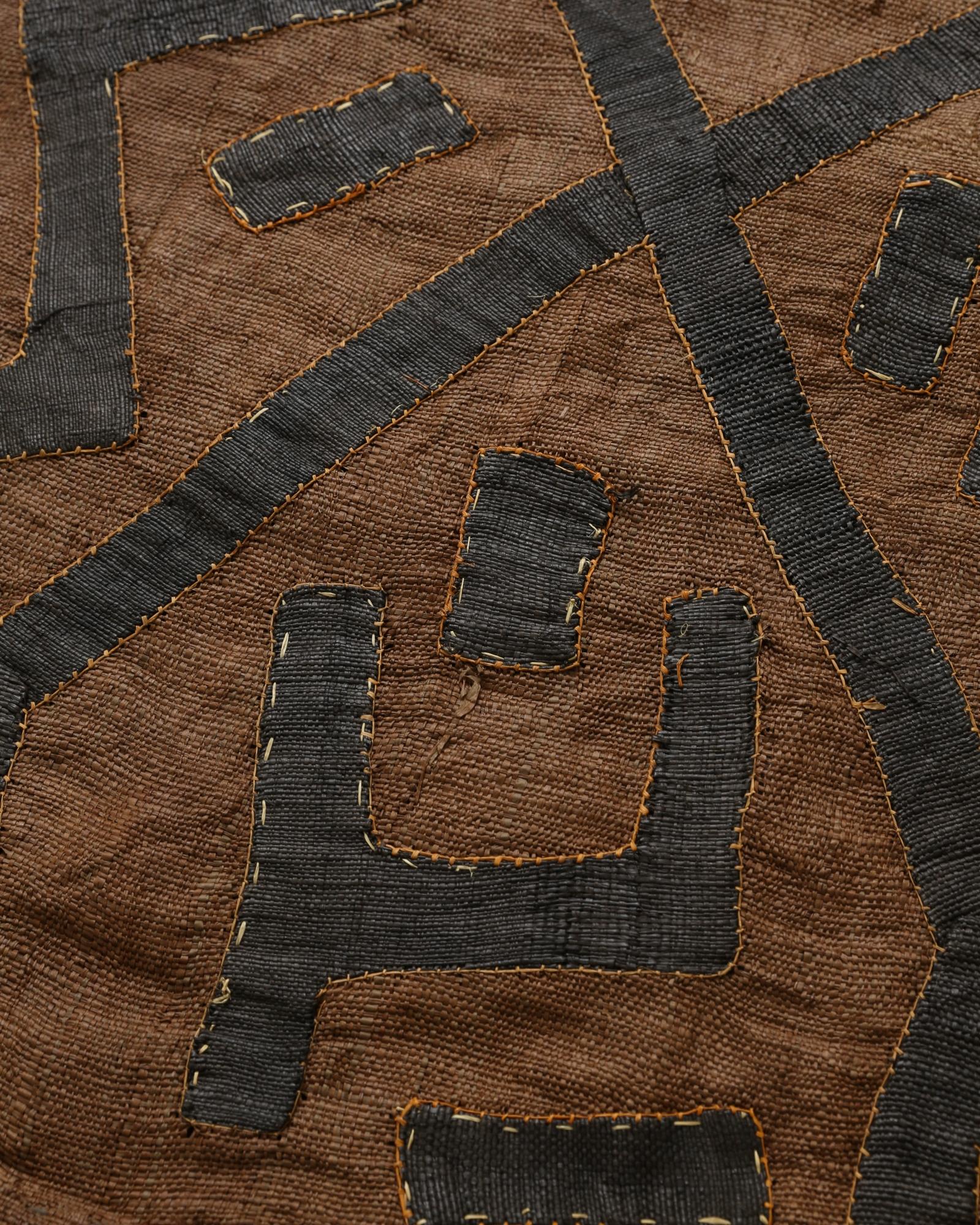
ラフィア椰子の繊維を手織りした地布に、同じくラフィアの黒褐色の布片を切り抜いて縫い留めた、クバ(Kuba)の装飾布。コンゴ民主共和国のカサイ地方に興ったクバ王国では、男性が織り上げた平織りの地布に女性が刺繍やアップリケを施すという分業で布が作られ、儀礼用の巻きスカートや葬礼の副葬品として用いられてきました。 赤みを帯びた地色は、カムウッド(トゥクラ)と呼ばれる樹木から採った赤色顔料による伝統的な染色によるものです。文様は下絵を用いず、織り手の記憶と即興で構成されるため、直線や矩形を基調としながらも同じ形が二つとない非対称な画面が生まれます。この布にも大きな交差文を中心に、鉤形・帯状のかたちが規則に縛られずに散らされ、モダンアートを思わせるリズムが生まれています。 幅の限られた織り布を数枚縫い合わせて一枚の長い布に仕立てており、接ぎ目や補修の当て布、ほつれた繊維の一本一本に、儀礼の場で実際に使われてきた時間が残ります。コンゴ民主共和国、20世紀前半〜中頃。
A Kuba textile: a hand-woven raffia-palm ground cloth onto which dark brown raffia shapes have been cut and appliqued by hand. In the Kuba Kingdom of the Kasai region of the Democratic Republic of the Congo, cloth was made through a division of labour -- men wove the plain-weave ground, women worked the embroidery and applique -- and the results served as ceremonial wrapped skirts and as funerary goods. The reddish ground colour comes from tukula, a traditional red pigment ground from camwood. Patterns were composed without any preparatory drawing, from memory and improvisation, so although the vocabulary is built from straight lines and rectangles, no two shapes repeat and the surface stays asymmetric. Here, hook and band forms scatter around a large crossing motif with a rhythm that reads as strikingly modern. Several narrow woven panels are seamed together into one long cloth, and the joins, the patched repairs and the loose fibre ends all carry the time it spent in actual ceremonial use.D.R. Congo, early-to-mid 20th century.