
Old Wedgwood
ウェッジウッド ディネット 八角皿 A
England / 19th century
W11cm × L11.5cm × H2.2cm
¥4,950 (tax in)
Stock: 01
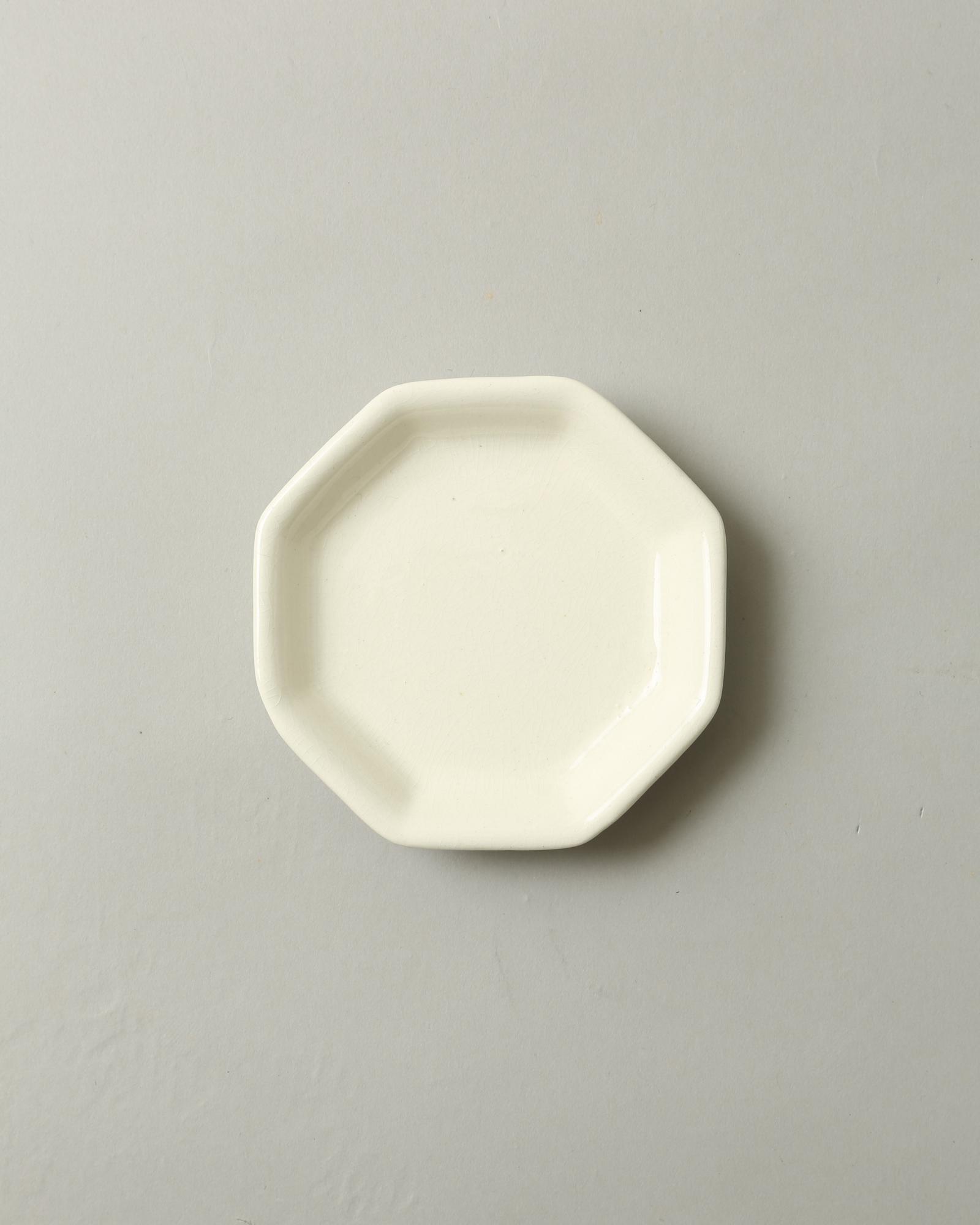
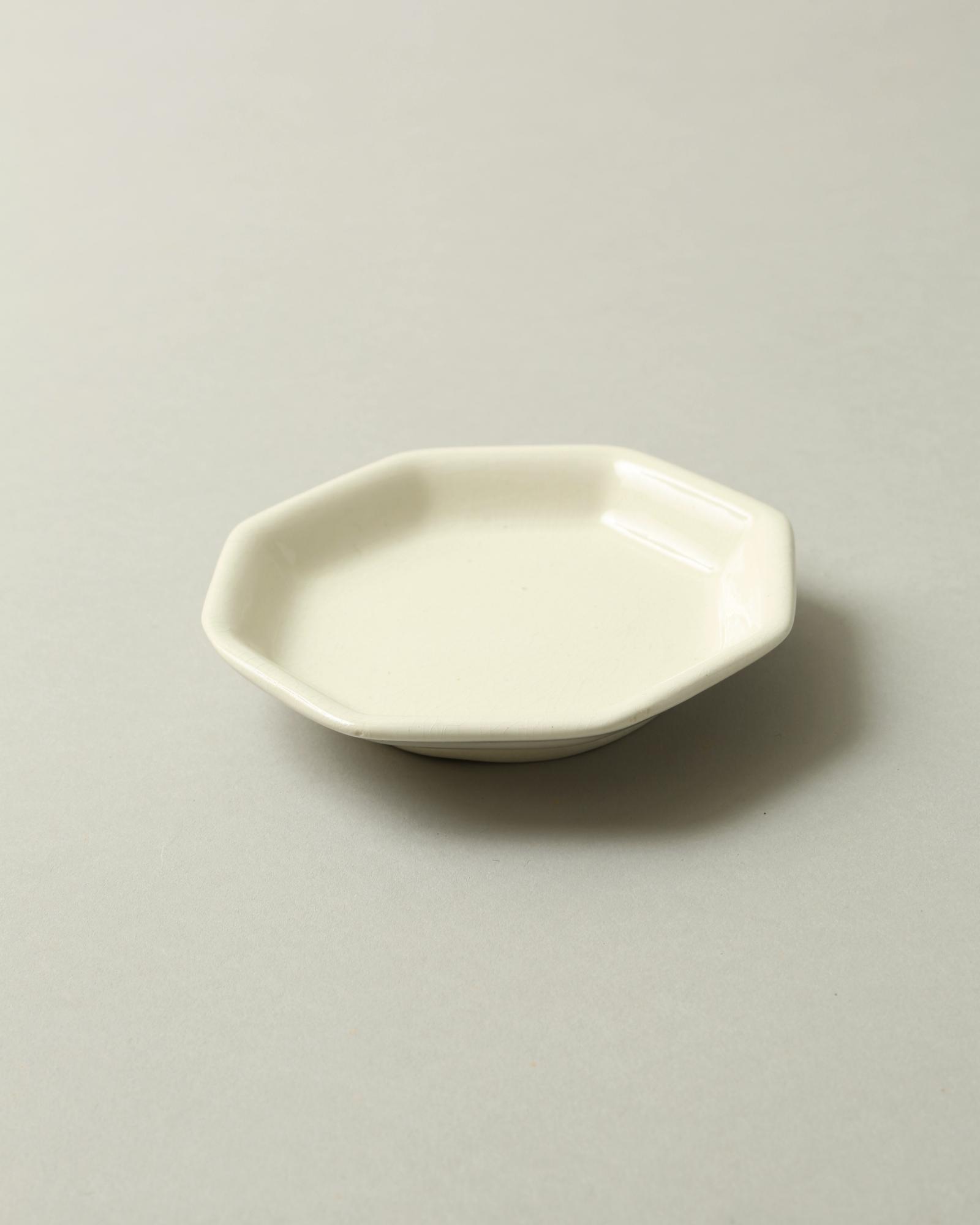
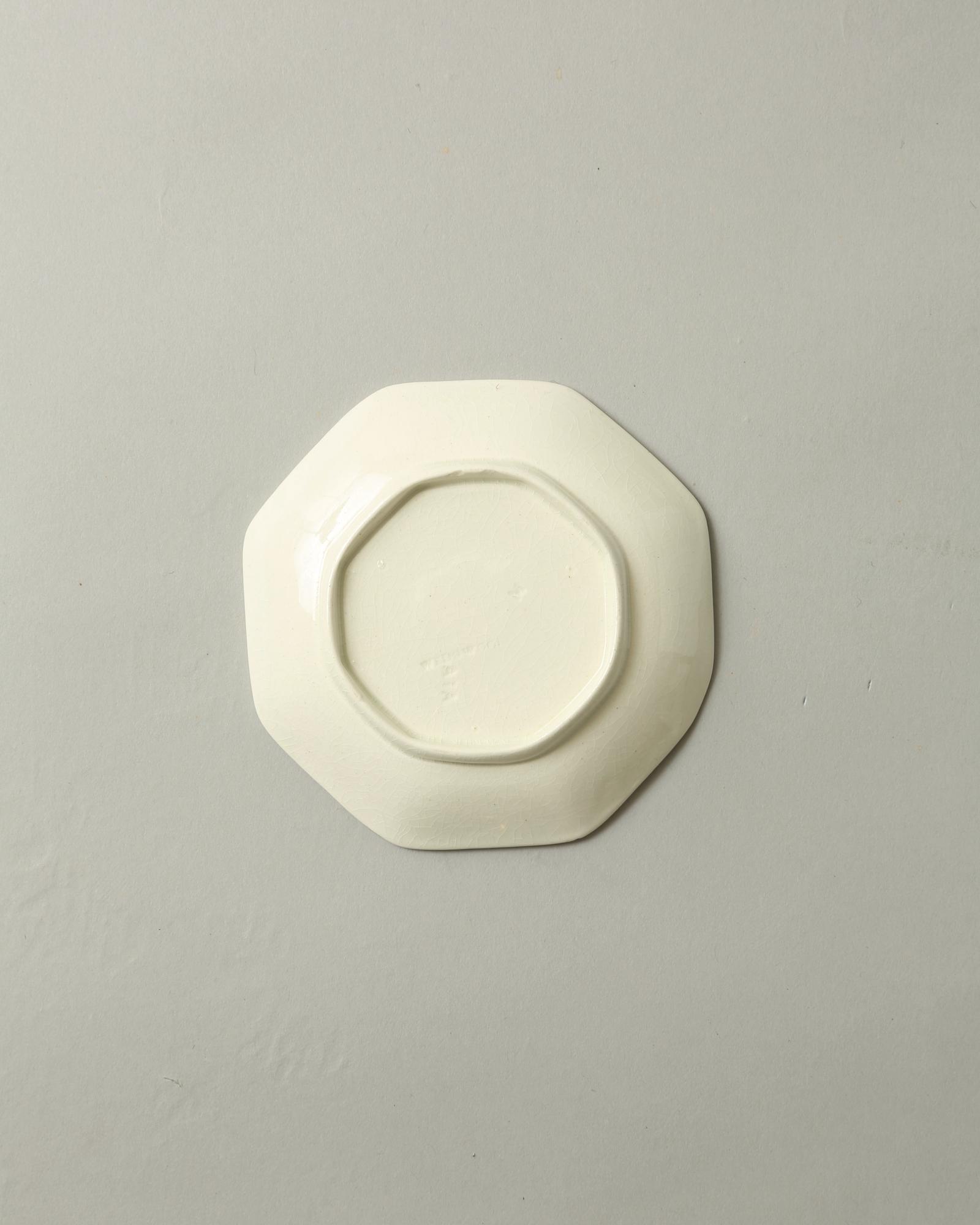
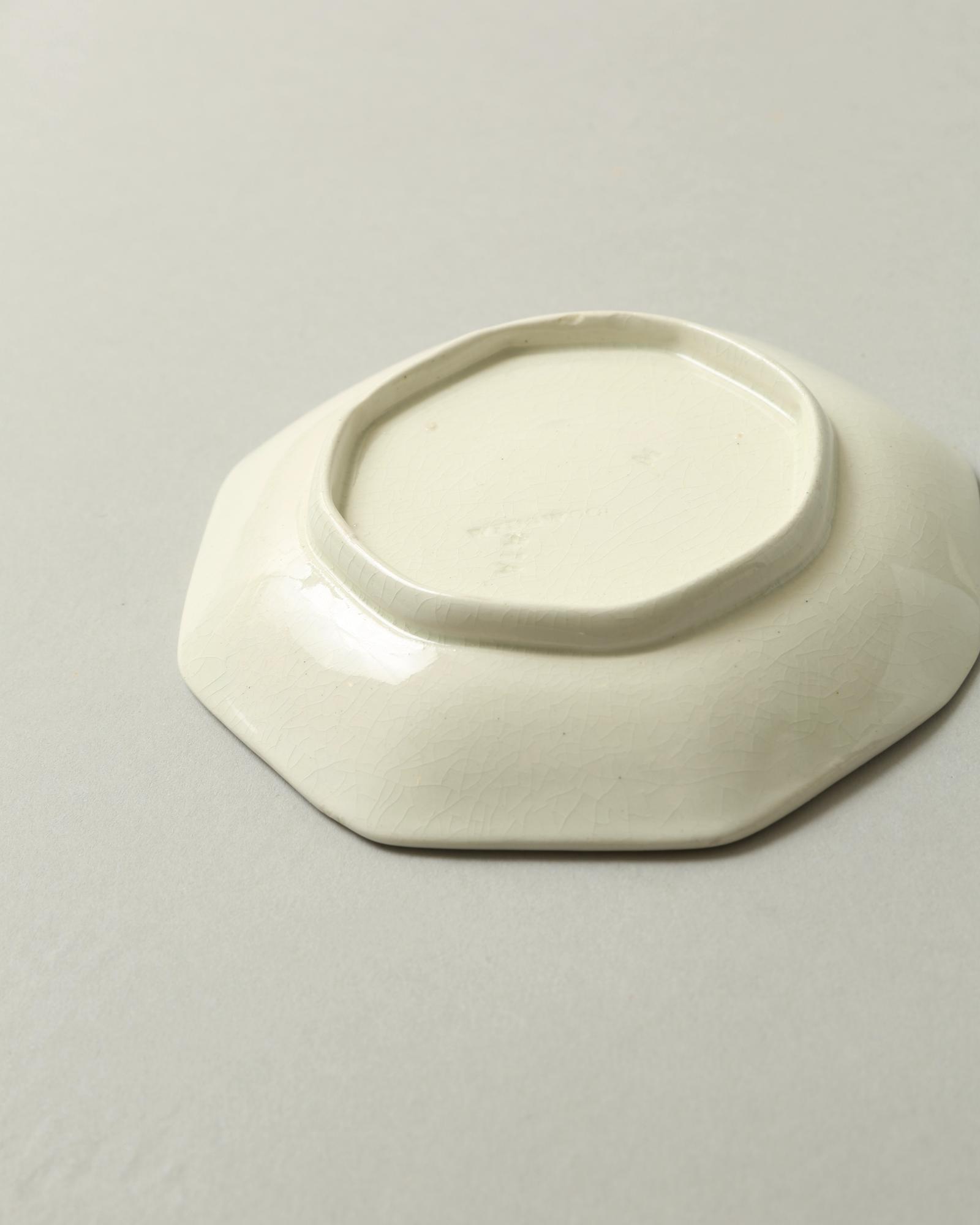
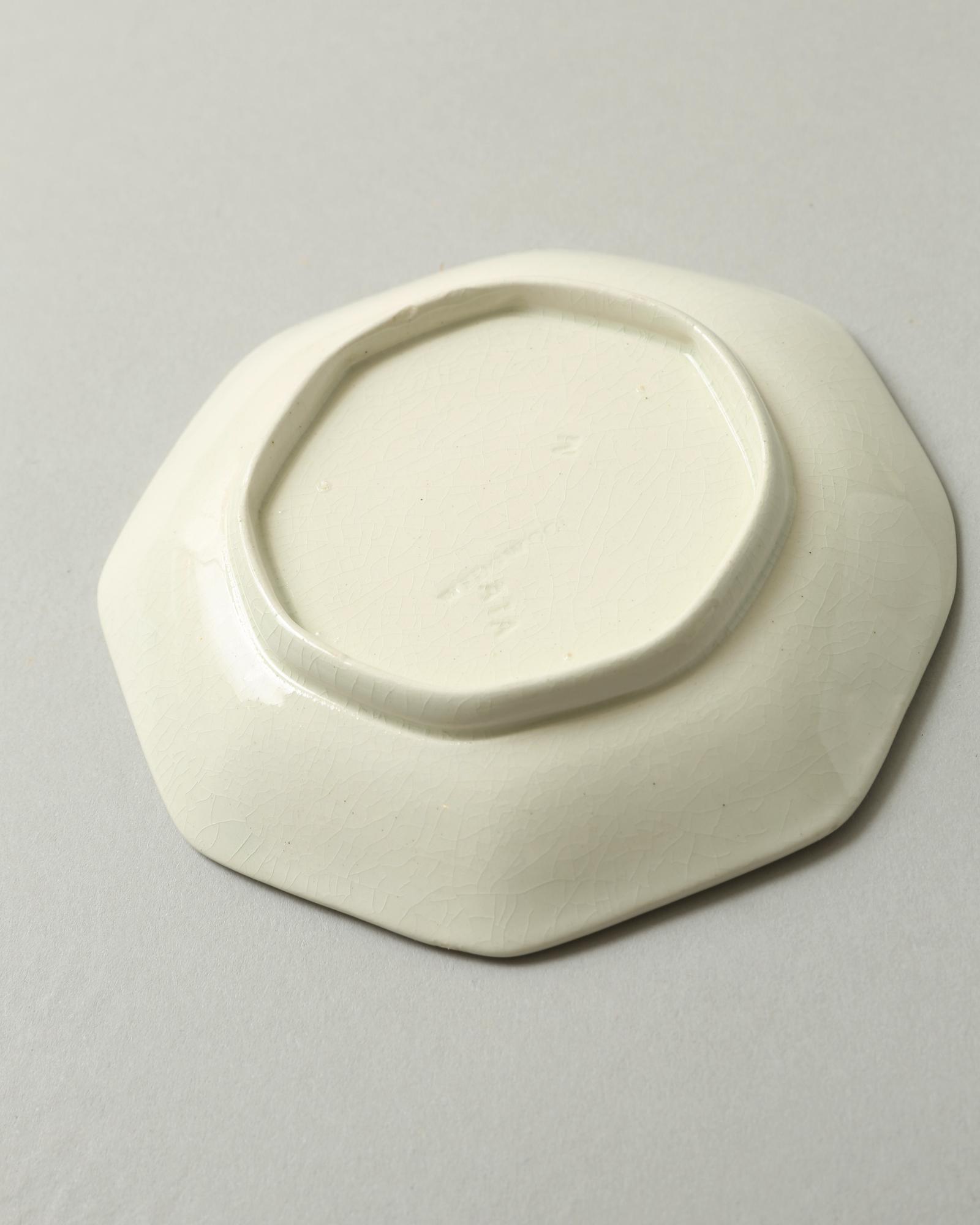
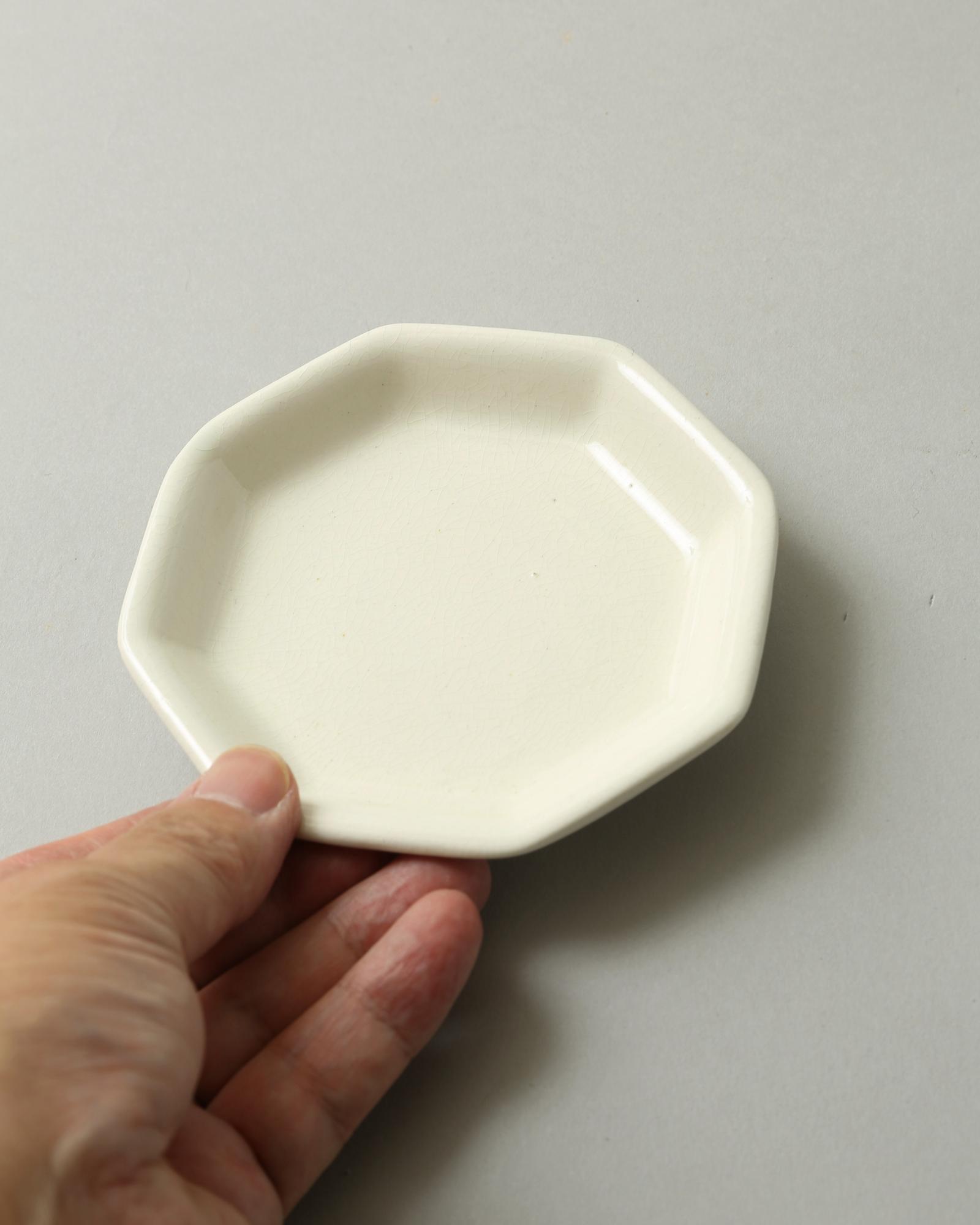
八角に面取りされた小皿。型で起こした稜線がくっきりと立ち、光の当たる面ごとに白の濃さが変わります。19世紀のイギリスで、ウェッジウッドが子供のために作ったミニチュアの食器一式「ディネット」の一点です。玩具として作られながら、大人の器と同じ土と同じ工程で焼かれており、縮尺だけを小さくした本物という佇まいをしています。 裏面には WEDGWOOD の刻印。1891年以降、輸出品に義務づけられた「ENGLAND」の併記がないことから、それ以前の製作と考えられます。クリームウェア(クイーンズウェア)特有の、わずかに黄みを含んだ温かな白をしています。 一枚ごとに寸法がわずかに違うのは、手仕事で型から起こしているためです。銘々皿として、菓子皿として。19世紀のやきものですので、焼成時の小さな黒点や、ごく細かな貫入が見られることがあります。いずれも時代を経たもの本来の表情です。 イギリス、19世紀。
A small plate cut into eight facets. The mould has left crisp ridges, and the white shifts in depth from face to face as the light moves. One piece from a “Dinette” — a miniature dinner service Wedgwood made for children in nineteenth-century England. Made as a toy, but from the same clay and by the same process as the full-size ware: the real thing, only smaller. Impressed WEDGWOOD on the base. It carries no “ENGLAND”, which was required on exported wares from 1891, so it was almost certainly made before then. The warm, faintly yellow white is characteristic of creamware — Queensware, as Wedgwood called it. No two measure quite the same, because each was raised from the mould by hand. A plate for one person, or for a cake. As a nineteenth-century piece it may show small dark specks from the firing, or fine crazing. Both belong to the ware. England, 19th century.