
Old Wedgwood
ウェッジウッド ディネット 八角ボウル
England / 19th century
W12.5cm × L13.2cm × H6cm
¥9,900 (tax in)
Stock: 01
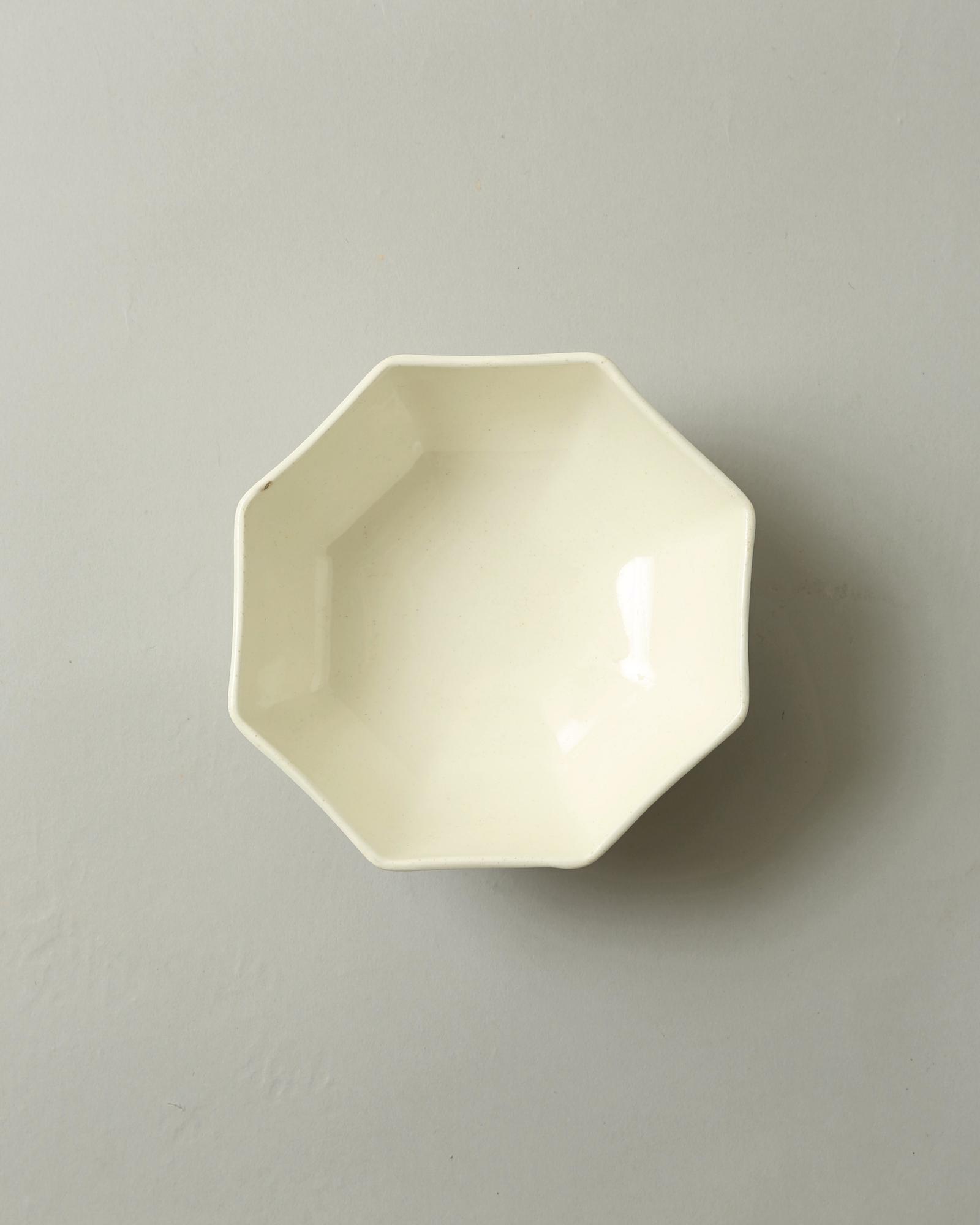
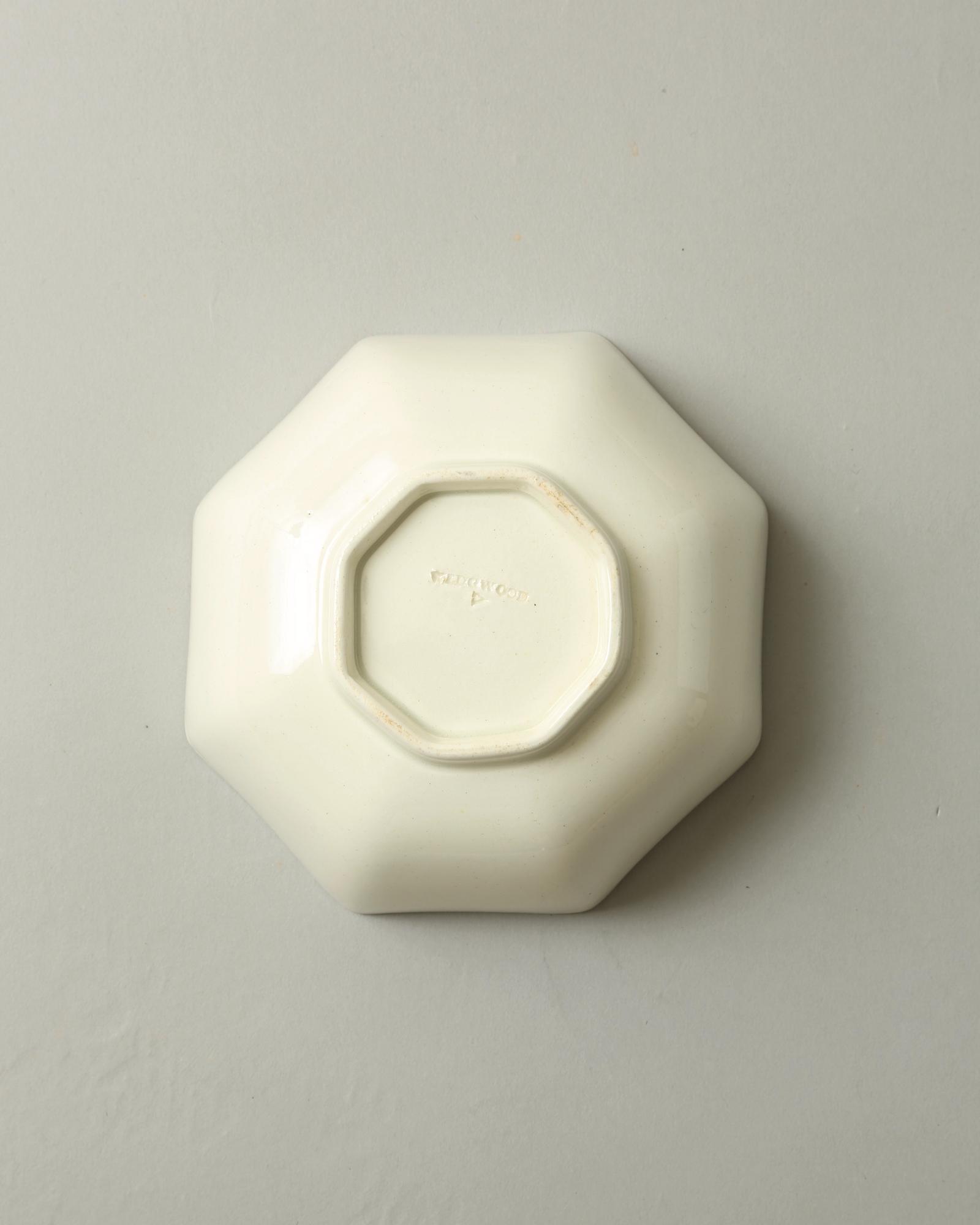
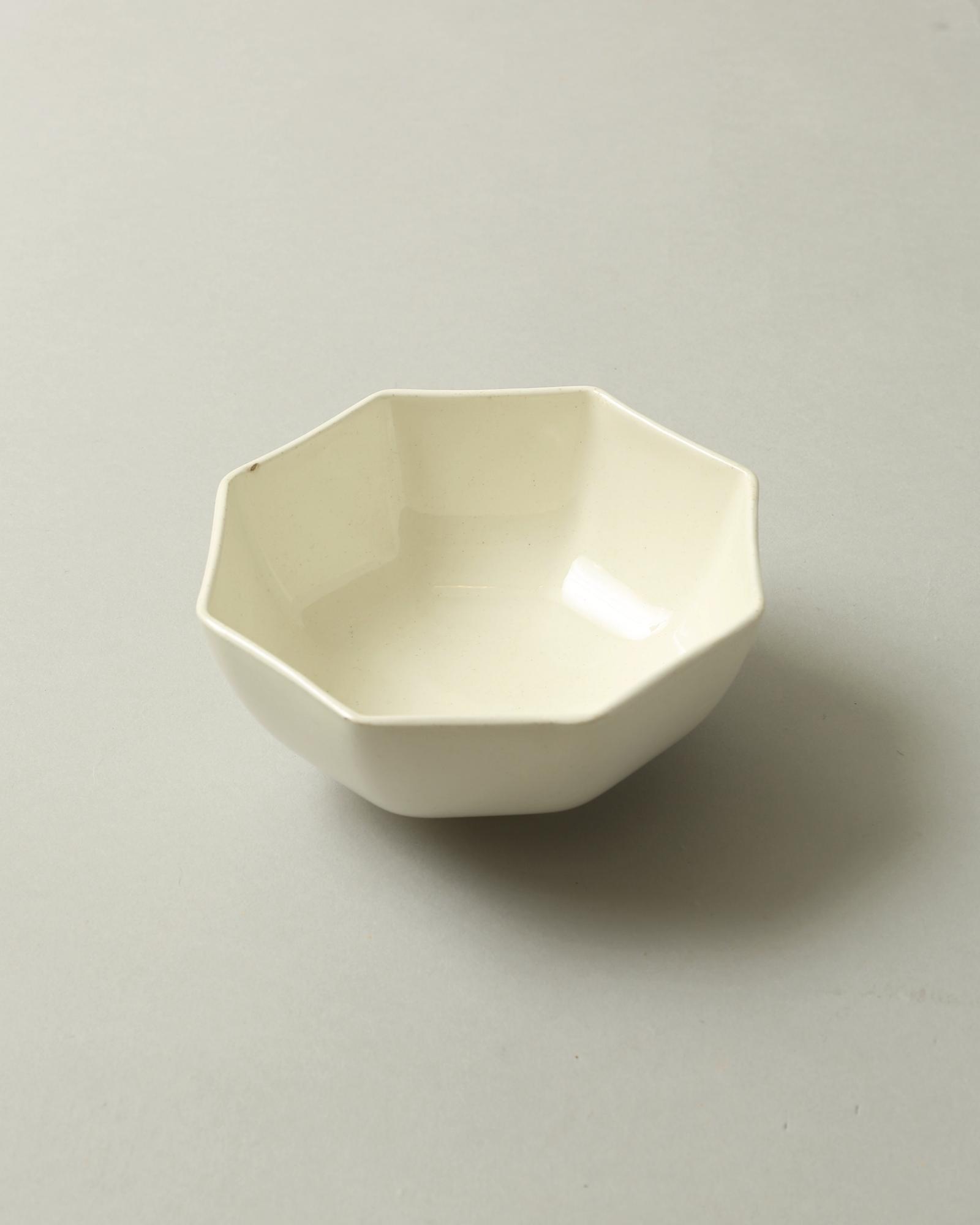
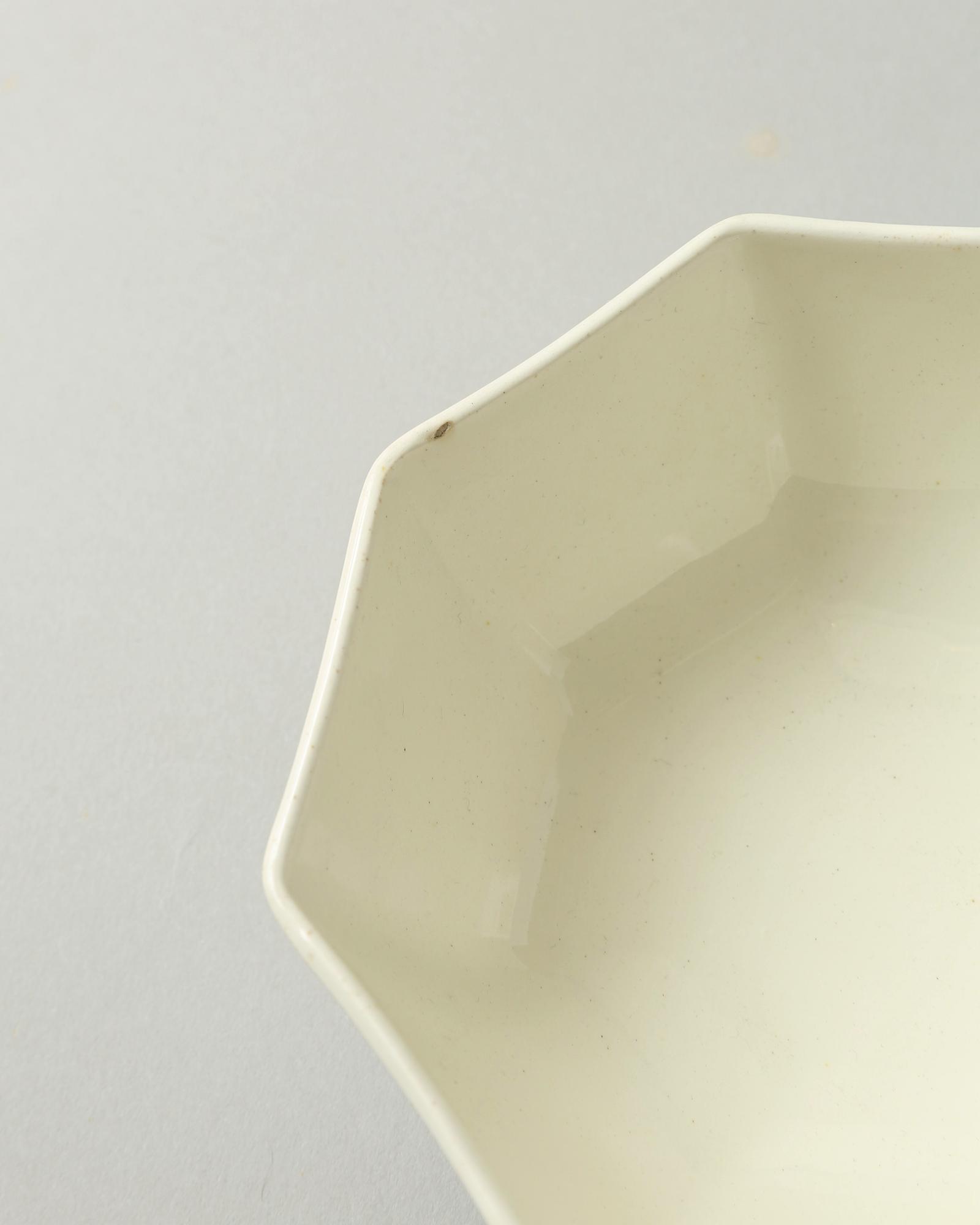
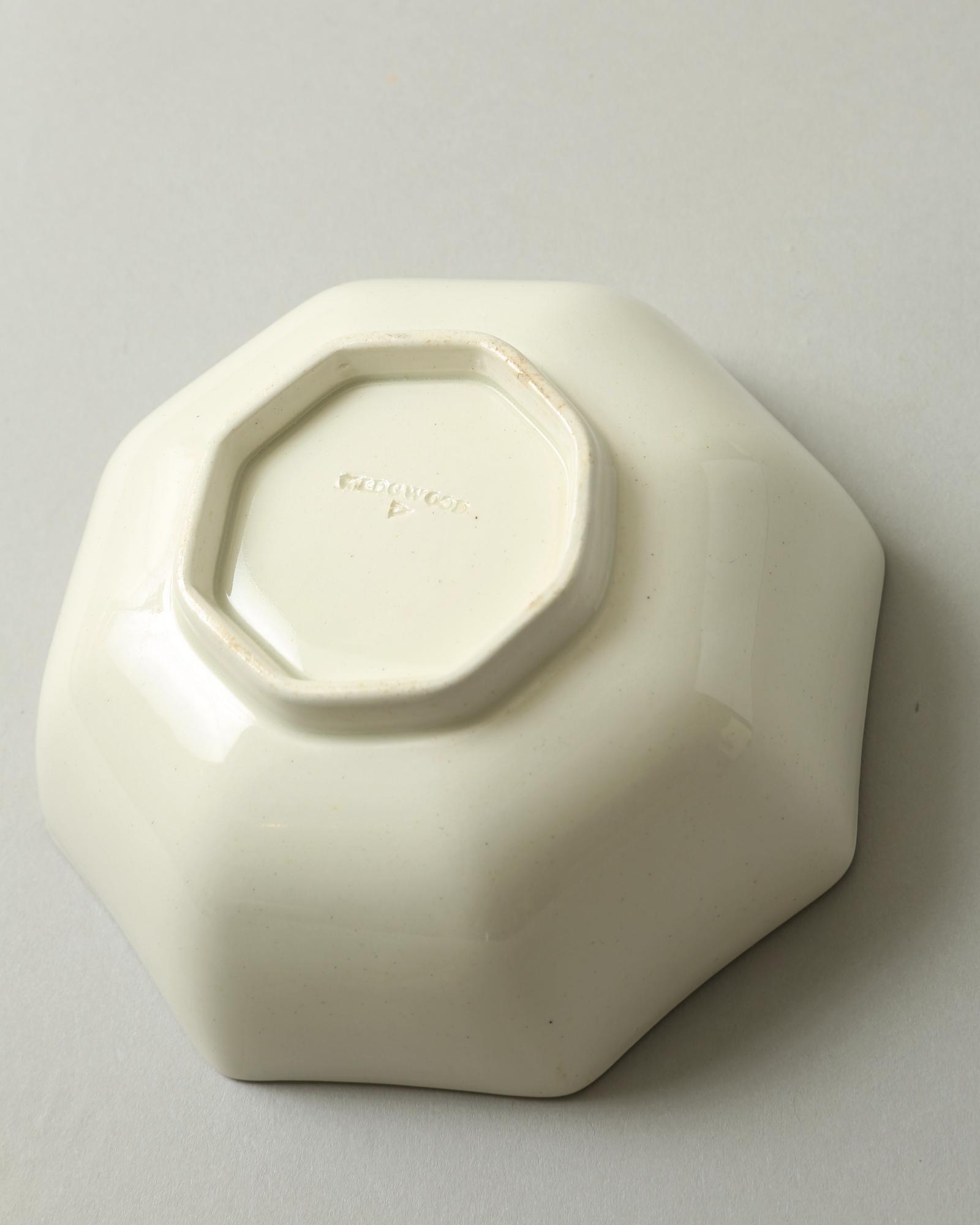
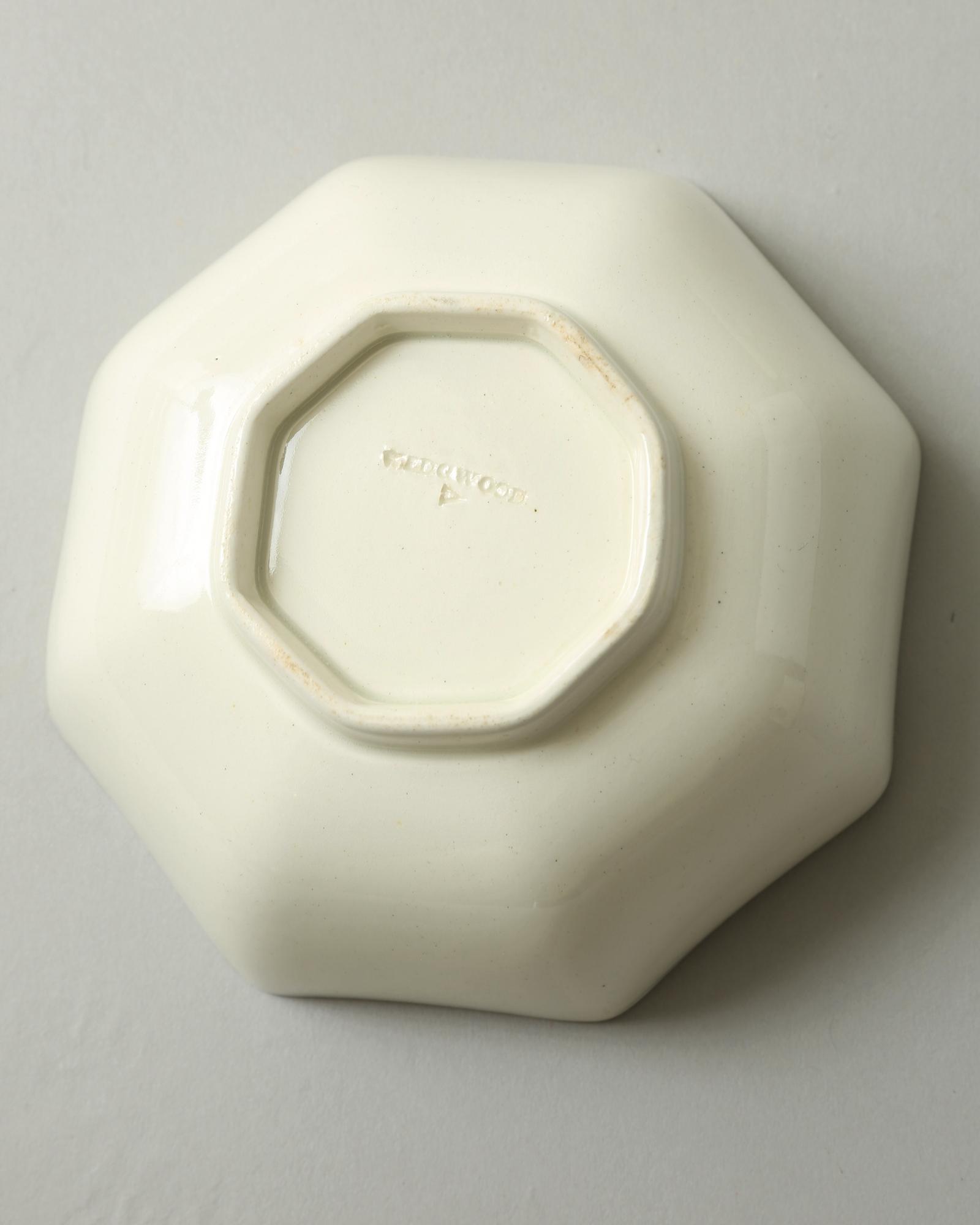
八角に面取りされた、深さ6cmのボウル。皿ものに比べて袋物は成形が難しく、現存数もぐんと少なくなります。見込みにも稜線がそのまま通り、内側から見ても八角であることがわかります。19世紀のイギリスで、ウェッジウッドが子供のために作ったミニチュアの食器一式「ディネット」の一点です。玩具として作られながら、大人の器と同じ土と同じ工程で焼かれており、縮尺だけを小さくした本物という佇まいをしています。 裏面には WEDGWOOD の刻印。1891年以降、輸出品に義務づけられた「ENGLAND」の併記がないことから、それ以前の製作と考えられます。クリームウェア(クイーンズウェア)特有の、わずかに黄みを含んだ温かな白をしています。 見込みの縁近くに、焼成時の鉄分による小さな黒点があります(4枚目)。傷ではなく、この時代のクリームウェアにしばしば見られるものです。小鉢として、果物や菓子を盛る器として。 イギリス、19世紀。
An octagonal bowl, 6cm deep. Hollow ware is harder to form than flat ware, and fewer of these survive than the plates. The facets carry through to the inside, so it reads as an octagon from above as well. One piece from a “Dinette” — a miniature dinner service Wedgwood made for children in nineteenth-century England. Made as a toy, but from the same clay and by the same process as the full-size ware: the real thing, only smaller. Impressed WEDGWOOD on the base. It carries no “ENGLAND”, which was required on exported wares from 1891, so it was almost certainly made before then. The warm, faintly yellow white is characteristic of creamware — Queensware, as Wedgwood called it. Near the rim inside there is a small dark speck from iron in the firing (fourth photograph). Not damage — a common mark on creamware of this date. For fruit, for sweets, or as a small serving bowl. England, 19th century.